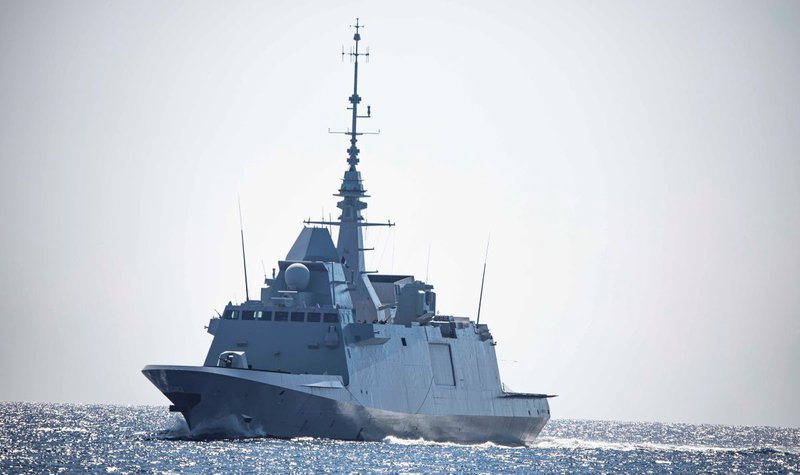
New interceptors and launchers could help navies preserve missile stocks during prolonged escort operations. Yet lower engagement costs will only improve merchant protection if the weapons are available where ships need defending.
Western armies continue to test uncrewed ground vehicles, but wider procurement will depend on turning ambitions for autonomy into defined operational roles and funded requirements.
BAE Systems has received a $76 million contract from the US Navy to help develop communications and electronics systems for the Naval Air Warfare Center …
Cubic Global Defense has received a contract worth more than $25 million from an undisclosed customer in the Asia-Pacific region for the delivery of three …
The US closure of Joint Special Operations Task Force - Philippines (JSOTF-P) in Mindanao, southern Philippines in 2015 appears to have been premature, in light …
Northrop Grumman has received a contract worth $265 million from the US Air Force for aircraft maintenance and logistics support of the Battlefield Airborne Communications …
Lockheed Martin’s Advanced Off-Board Electronic Warfare (AOEW) system has successfully passed its preliminary design review (PDR), the company announced on 5 September. The company’s AOEW …
The Science and Technology Directorate at United States Special Operations Command (USSOCOM) has identified technology areas of interest associated with C4. USSOCOM Science and Technology …
The first prototype Leopard 2A4 upgraded for the Polish Army has now entered verification testing in Germany, with an additional five pre-series vehicles also joining …
General Dynamics Land Systems (GDLS) has received two contracts from the US Army for Abrams main battle tank upgrades, the company announced on 5 September. …
Kratos Defense and Security Solutions has received a foreign military sales (FMS) indefinite delivery indefinite quantity contract worth $46 million to provide training-related products and …