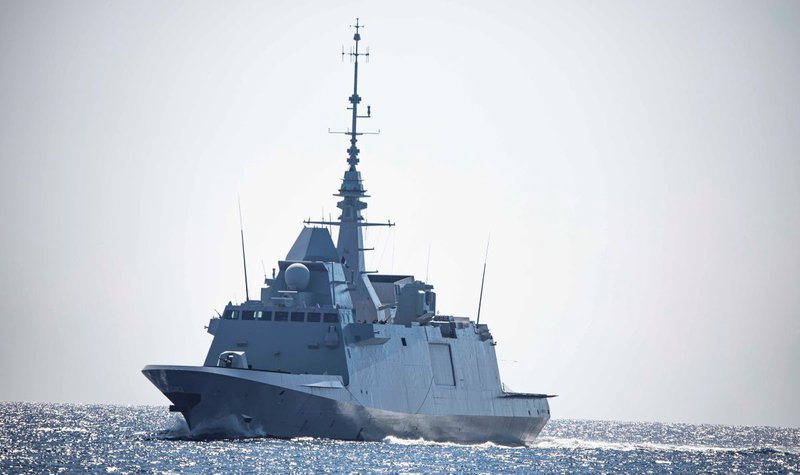
New interceptors and launchers could help navies preserve missile stocks during prolonged escort operations. Yet lower engagement costs will only improve merchant protection if the weapons are available where ships need defending.
Western armies continue to test uncrewed ground vehicles, but wider procurement will depend on turning ambitions for autonomy into defined operational roles and funded requirements.
Israel Aerospace Industries (IAI) has delivered advanced 3D Air Defense Radar systems to an undisclosed European NATO member country, the company announced on 24 October. …
Speaking at this week’s Commercial UAV Expo in Las Vegas industry analysts addressed some conflicting projections regarding the potential size of the drone market. Two …
Building on the company's experience with projection technologies, Epson has developed a third generation of its first person viewing (FPV) glasses with augmented reality. Designated …
The US Marine Corps (USMC) needs industry’s help bridging communication gaps and preparing its deployed marines for austere environments. The USMC's director C4 and chief information …
The US Coast Guard’s (USCG) small UAS National Security Cutter (NSC) programme has received approval to progress to the next phase, the USCG announced on …
As attention turns to Future Vertical Lift (FVL) as the US Army’s next-generation of aircraft, the AH-64 Apache remains a key platform to the service’s fleet …
Two years ago a unique Republic of Korea-US Combined Division was formed utilising the US Army's 2nd Infantry Division (2ID), and shortly afterwards the resident …
Israel Aerospace Industries (IAI) has been contracted by Airbus Defence and Space for the ELM-2022A maritime patrol radar, the company announced on 23 October. The …
VSTEP has received a contract from CAE to provide a suite of custom-built ship bridge simulators for the United Arab Emirates’ (UAE) Naval Training Centre …