Vietnam eyes SAR vessels from Poland


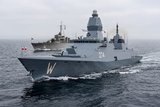
The Vietnam Coast Guard (VCG) is eyeing six new search and rescue (SAR) vessels following a framework loan agreement struck between Hanoi and Warsaw.
The agreement, worth approximately $240 million and to be managed by Cenzin – a Polish trading company representing the Polish Armaments Group (PGZ) – was signed by Polish President Andrzej Duda and Vietnamese President Chiang Dai Kuang in Hanoi on 28 November.
However, a contract will not eventuate until negotiations on funding are completed. Cenzin said in a press release that should negotiations ‘go smoothly’ construction of the first unit will begin in 2018.
Remontowa Shipbuilding
Our news & analysis is now part of Defence Insight®
A Basic-level or higher Defence Insight subscription is now required to view this content.


More from Naval Warfare
-
![Canada assesses security equipment changes for Polar Icebreaker Imnaryuaq]()
Canada assesses security equipment changes for Polar Icebreaker Imnaryuaq
The Canadian Department of National Defence is evaluating communications and reconnaissance changes for CCGS Imnaryuaq’s expanded maritime security role, while retaining its 2032 acceptance target.
-
![US Navy’s MQ-25 Stingray approaches carrier-integration tests]()
US Navy’s MQ-25 Stingray approaches carrier-integration tests
Boeing has outlined its upcoming precision-landing and carrier-airspace trials as MQ-25 manufacturing shifts towards Illinois, with initial Lot 1 deliveries expected in 2029.
-
![From Poland to the Pacific: can Miecznik become a blueprint for other navies?]()
From Poland to the Pacific: can Miecznik become a blueprint for other navies?
Babcock is taking its Polish industrial partnership approach to Denmark and New Zealand as navies seek sovereign shipbuilding skills alongside ships.
-
![Unsettled waters in the North: can navies still trust their Arctic acoustic maps?]()
Unsettled waters in the North: can navies still trust their Arctic acoustic maps?
The changing Arctic environment is creating new challenges for submarine detection, driving demand for distributed sensors, uncrewed underwater vehicles and real-time acoustic modelling.