USN welcomes back Wyoming
Major midlife refurbishment completed at Norfolk Naval Shipyard


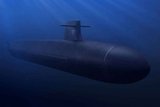
The Ohio-class nuclear-powered ballistic missile submarine (SSBN) USS Wyoming (pictured) returned to the USN active fleet after a 27-month Engineered Refueling Overhaul midlife refurbishment programme at Norfolk Naval Shipyard, Naval Sea Systems Command announced on 9 October.
Missile operational testing was completed in just eight weeks, breaking Norfolk Naval Shipyard’s previous record of 10.5 weeks for USS Rhode Island.
Ohio-class boats displace 17,033t surfaced and 19,000t submerged. The submarines measure 170.7m in length, have a beam of 12.8m and draft of 11.1m.
Shephard Defence Insight notes that all submarines in the class will eventually be removed from service between 2027 and 2040. They will be replaced by Columbia-class SSBNs from 2031.
As part of our promise to deliver comprehensive coverage to our Defence Insight and Premium News subscribers, our curated defence news content provides the latest industry updates, contract awards and programme milestones.
Related Equipment in Defence Insight




More from Naval Warfare
-
![Competitive P17B tender marks a shift in Indian Navy frigate procurement]()
Competitive P17B tender marks a shift in Indian Navy frigate procurement
The Indian Navy's P17B programme is expected to combine greater weapons capacity with a competitive domestic construction model, although key systems could remain dependent on international supply chains.
-
![How France’s SNLE 3G programme is reshaping the naval nuclear industrial base]()
How France’s SNLE 3G programme is reshaping the naval nuclear industrial base
Extending far beyond a four-submarine replacement programme, France’s ballistic missile submarine effort is a decades-long industrial initiative designed to preserve the country’s ability to build and sustain nuclear-powered strategic platforms.
-
![Quantum Systems enters maritime domain with Baltic-focused USV and UUV]()
Quantum Systems enters maritime domain with Baltic-focused USV and UUV
Quantum Systems has launched into the maritime domain with Seavex and Subvex, aiming to close a Baltic Sea ISR gap opened by infrastructure sabotage.
-
![Suppliers await next step in Australia’s mine warfare transition]()
Suppliers await next step in Australia’s mine warfare transition
Australia’s mine countermeasure capability remains in flux as the Huon-class nears retirement, but accelerated investment in autonomous systems is opening a path for industry.
-
![Can the US Navy ask Indo-Pacific allies to do more while training with them less?]()
Can the US Navy ask Indo-Pacific allies to do more while training with them less?
As the Iran War draws US ships and marine corps units away from the Indo-Pacific, curtailed exercises and a temporary carrier gap are exposing tensions between Washington’s demand for more self-reliant allies and the joint training needed to realise that ambition.