USN continues hypersonic developments
SPA works with SAIC on supporting Conventional Prompt Strike programme


Systems Planning and Analysis (SPA) on 23 November announced a subcontract from SAIC to continue supporting the Conventional Prompt Strike advanced hypersonic programme for the USN at the Naval Surface Warfare Center (NSWC) in Crane, Indiana.
SPA is teamed with prime contractor SAIC on a five-year contract worth $63.5 million, as part of a relationship on hypersonic development dating back to 2016.
Work under the latest contract includes programme management and budget support, system safety, risk management, scheduling, system and subsystem test and evaluation, ‘and system integration of the weapon system onto operational platforms’, SPA noted.
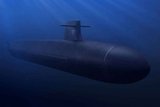
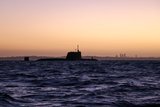
The Conventional Prompt Strike programme aims to field a hypersonic boost-glide vehicle on USN submarines. An intermediate-range missile is initially envisaged by the USN for an Ohio-class SSGN. The USN also plans to arm new Virginia-class boats with this hypersonic strike weapon, beginning in 2028.
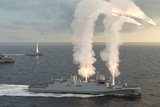
Furthermore, USN Vice Adm Richard Brown said in January 2020 that Zumwalt-class destroyers should be armed with hypersonic weapons.
As part of our promise to deliver comprehensive coverage to our Defence Insight and Premium News subscribers, our curated defence news content provides the latest industry updates, contract awards and programme milestones.


More from Naval Warfare
-
![How France’s SNLE 3G programme is reshaping the naval nuclear industrial base]()
How France’s SNLE 3G programme is reshaping the naval nuclear industrial base
Extending far beyond a four-submarine replacement programme, France’s ballistic missile submarine effort is a decades-long industrial effort designed to preserve the country’s ability to build and sustain nuclear-powered strategic platforms.
-
![Quantum Systems enters maritime domain with Baltic-focused USV and UUV]()
Quantum Systems enters maritime domain with Baltic-focused USV and UUV
Quantum Systems has launched into the maritime domain with Seavex and Subvex, aiming to close a Baltic Sea ISR gap opened by infrastructure sabotage.
-
![Suppliers await next step in Australia’s mine warfare transition]()
Suppliers await next step in Australia’s mine warfare transition
Australia’s mine countermeasure capability remains in flux as the Huon-class nears retirement, but accelerated investment in autonomous systems is opening a path for industry.
-
![Can the US Navy ask Indo-Pacific allies to do more while training with them less?]()
Can the US Navy ask Indo-Pacific allies to do more while training with them less?
As the Iran War draws US ships and marine corps units away from the Indo-Pacific, curtailed exercises and a temporary carrier gap are exposing tensions between Washington’s demand for more self-reliant allies and the joint training needed to realise that ambition.
-
![How could Rheinmetall’s GMF 140 fit with ongoing programmes in North America?]()
How could Rheinmetall’s GMF 140 fit with ongoing programmes in North America?
With Canada committed to its River-class replacement and the USN pursuing a lower-cost frigate, Rheinmetall will need to demonstrate where the GMF 140 can fill a capability gap in the North American fleet.