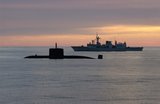
USCG receives William Hart FRC


The US Coast Guard (USCG) received its 34th Fast Response Cutter (FRC), William Hart, in Key West, Florida, on 23 May.
This will be the third of three FRCs to be stationed in Honolulu.
The FRCs feature advanced command, control, communications, computers, intelligence, surveillance and reconnaissance equipment.They have improved habitability and seakeeping, and over-the-horizon cutter boat launch and recovery from astern or via side davits. Each FRC is 154ft long, has an endurance of at least five days and can reach a maximum speed of over 28 knots.
The USCG has ordered 50 FRCs to date of which 32 are in service: 12 in Florida; six in Puerto Rico; four in California and two each in Alaska, New Jersey, Mississippi, Hawaii and North Carolina.
Related Equipment in Defence Insight



More from Naval Warfare
-
![Euronaval 2026: Red Cat’s Blue Ops follows USV demand from Asia to the Andes]()
Euronaval 2026: Red Cat’s Blue Ops follows USV demand from Asia to the Andes
With its B-26 USV in full-rate production, Blue Ops is seeking to turn overseas interest into orders through a combination of lower operating costs, UAV integration and local manufacturing.
-
![Euronaval 2026: ‘I want to sell 31 Type 31s by 2031’ - CGO maps Babcock’s global push]()
Euronaval 2026: ‘I want to sell 31 Type 31s by 2031’ - CGO maps Babcock’s global push
Chief growth officer Sir Nick Hine tells Shephard how Babcock is lining up New Zealand, Chile, Denmark and the US for its Arrowhead 140 frigate, speaks on the hybrid navy offer and talks AUKUS.
-
![From Chokepoints to the Deep: ASELSAN’s Naval Vision at EURONAVAL]()
From Chokepoints to the Deep: ASELSAN’s Naval Vision at EURONAVAL
From deployable ship defence to autonomous sea and underwater vehicles, ASELSAN is preparing for a new era of naval security.
-
![Euronaval 2026: by the power of six, Fincantieri’s MMMV reflects modular naval shift]()
Euronaval 2026: by the power of six, Fincantieri’s MMMV reflects modular naval shift
The 50m, six-person ship from the Italian shipbuilder carries swappable, containerised payloads instead of a fixed mission, reflecting a shift that is becoming increasingly evident.
-
![Canada’s submarine availability under pressure as Chicoutimi is unlikely to return to front-line duties]()
Canada’s submarine availability under pressure as Chicoutimi is unlikely to return to front-line duties
HMCS Victoria and HMCS Windsor could return from their current deep maintenance, but unconfirmed operational timelines leave questions over patrol capacity before the first CPSP arrives.