USCG completes Rescue 21 system


The US Coast Guard (USCG) has accepted into service the final tower in its Rescue 21 system, the USCG announced on 31 October.
The acceptance of the tower on 10 October marked the completion of a 20-year design and installation process to improve search and rescue (SAR) communications infrastructure throughout the US and its territories.
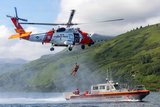
The Rescue 21 system is the USCG’s command, control and direction-finding communications system. It provides improved SAR communications and supports digital-selective calling, to enable the coast guard to carry out SAR operations effectively and efficiently, to locate vessels in distress and save lives and property at sea and on navigable rivers.
Rescue 21 is now operational along the coasts of the contiguous US; Hawaii; Puerto Rico; Guama; the US Virgin Islands; the Northern Marianas Islands of Saipan, Tinian and Rota; in parts of Alaska; Mississippi, Missouri and Ohio rivers and their major tributaries.

More from Naval Warfare
-
![Production-ready beats prototype-ready in the US Navy’s MUSV marketplace]()
Production-ready beats prototype-ready in the US Navy’s MUSV marketplace
HII, Saronic and Galliano Marine Services have won US Navy production contracts to supply medium uncrewed surface vessels. The marketplace approach behind them sets the bar for suppliers eyeing allied navy competitions.
-
![Anduril’s $6.6bn wager on fixing America’s submarine bottleneck]()
Anduril’s $6.6bn wager on fixing America’s submarine bottleneck
Anduril’s Arsenal-2 is a gamble on a brand-new yard and perfect timing, but with Virginia-class output stuck at 1.1 to 1.2 boats a year, it is a bet worth making.
-
![From REPMUS to procurement: the four capabilities NATO navies want from USVs]()
From REPMUS to procurement: the four capabilities NATO navies want from USVs
Syos Aerospace will channel its first outside capital into research, production and overseas reach as navies seek jam-resistant, integrated uncrewed fleets.
-
![Canada targets 2027 frigate trials for CU179 Peregrine uncrewed helicopter]()
Canada targets 2027 frigate trials for CU179 Peregrine uncrewed helicopter
The Royal Canadian Navy’s CU179 Peregrine will undergo Halifax-class frigate trials in 2027 ahead of initial operational capability in 2028, while River-class destroyer integration arrangements remain undefined.