US enhances undersea ASW system software and hardware.
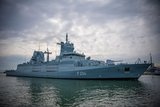
The Surveillance Towed Array Sensor System-equipped vessel USNS Able. (Photo: USN/
Integrated Common Processor provides a common Integrated Undersea Surveillance Systems signal processing and display system software and hardware suite.


The US Naval Information Warfare Systems Command on 2 September awarded Lockheed Martin Rotary and Mission Systems, a $63.62 million modification to a sole-source IDIQ contract for the Integrated Common Processor (ICP).
Being executed on behalf of the Program Executive Office Submarines’ Maritime Surveillance Systems Program Office, the ICP programme provides a common Integrated Undersea Surveillance Systems (IUSS) signal processing and display system software and hardware suite for Surveillance Towed Array Sensor System ships and IUSS shore sites.
No funding is being placed on the modification. Contract actions will be issued and funds obligated as individual delivery orders. Funds will be placed on contract with an initial delivery order issued to the contractor at the time of award.
Work will be performed in Manassas, Virginia, and is expected to be completed by December 2022.

You may also like

More from Naval Warfare
-
![Russia’s uncrewed boat portfolio hints at future naval demand]()
Russia’s uncrewed boat portfolio hints at future naval demand
Ukrainian intelligence has catalogued more than 20 Russian uncrewed surface vessels, revealing a portfolio weighted towards mine warfare and logistics, with implications for Western naval investment.
-
![Ukraine’s new long-range 12m autonomous vessel can deploy other drones]()
Ukraine’s new long-range 12m autonomous vessel can deploy other drones
Ukraine’s UForce unveiled the MV11 uncrewed surface vessel, designed to launch and support other naval drones at sea, fuelling debate over the future of autonomous maritime task groups.
-
![Global submarine suppliers compete for a rapidly shrinking market]()
Global submarine suppliers compete for a rapidly shrinking market
Diminishing submarine competitions worldwide are leaving fewer acquisition opportunities, pushing contractors toward alternatives.
-
![Future frigate programme highlights broader RNZN replacement challenge]()
Future frigate programme highlights broader RNZN replacement challenge
New Zealand’s evaluation of the Mogami and Arrowhead 140 frigate designs reflects a wider push for alliance interoperability, and points to a larger recapitalisation of the Royal New Zealand Navy fleet beyond the current programme.