Upgraded Aegis weapon systems proven operational on two US Navy cruisers
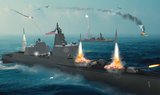
The US Navy, supported by Lockheed Martin, successfully completed Combat System Ship Qualification Trials for upgraded Aegis Combat Systems installed aboard two Navy ships.
The Navy determined that the Aegis Combat Systems aboard the cruisers USS Mobile Bay and USS Philippine Sea are fully operational. As part of the cruiser modernization program, the computer suites on these ships were upgraded with enhanced technical data collection capability and radar data display systems, as well as a new digital fire control interface between the anti-submarine warfare control system and the vertical launch system.
During the trials, the ships’ Aegis Combat Systems were evaluated for combat-readiness through comprehensive surface, subsurface and anti-air warfare exercises. These included manned raids and electronic attack scenarios, as well as thorough testing of the systems’ tactical data link and air defense capabilities.
“Lockheed Martin continues its legacy of working with the Navy to evolve the Aegis system,” said Jeff Bantle, Lockheed Martin’s vice president of Surface-Sea Based Missile Defense Systems. “We take great pride in our partnership as the Aegis Platform System Engineering Agent and look forward to using our experience to increase program affordability.”
The Aegis Weapon System includes the SPY-1 radar, the Navy’s most advanced radar system. When paired with the MK 41 Vertical Launching System, it is capable of delivering missiles for every mission and threat environment in naval warfare.
The Aegis Weapon System is deployed on 93 ships around the globe. Aegis is the weapon system of choice for Australia, Japan, Norway, the Republic of Korea and Spain. Aegis-equipped ships have more than 1,200 years of at-sea operational experience and have launched more than 3,800 missiles in tests and actual operations.
The USS Mobile Bay and the USS Philippine Sea are both Ticonderoga-class guided-missile cruisers.
Source: Lockheed Martin



You may also like

More from Naval Warfare
-
![US Navy’s $275 billion BBGN plan hinges on shipyard transformation]()
US Navy’s $275 billion BBGN plan hinges on shipyard transformation
The US Navy’s planned nuclear-powered warship carries a US$275 billion price tag, but the greater story lies in the industrial overhaul needed to build it, from AI-enabled design to digital twins and modular construction.
-
![Industry sees opportunity in Australia’s shift to networked undersea warfare]()
Industry sees opportunity in Australia’s shift to networked undersea warfare
Australia’s new defence innovation strategy indicates a shift from platform-centric to network-centric undersea warfare, with Ocius and Anduril Industries pointing to fast-growing opportunities for local industry.
-
![Asia-Pacific emerges as the largest export market for US-made USVs]()
Asia-Pacific emerges as the largest export market for US-made USVs
Asian customers have placed one of the largest known international purchases of US-built uncrewed surface vessels, highlighting accelerating regional demand for autonomous maritime capabilities and distributed naval operations.
-
![RTX confirms US Marine Corps and US Navy acquire Hadalus UUV]()
RTX confirms US Marine Corps and US Navy acquire Hadalus UUV
RTX told Shephard that the Hadalus UUV has been procured by the US Marine Corps and the Office of Naval Research for operational experimentation as the company prepares additional demonstrations with the US Navy, NATO and AUKUS partners.
-
![The UK joins the movement towards joint procurement]()
The UK joins the movement towards joint procurement
The UK will spend an estimated US$3.89 billion over the next decade in joint naval programmes, a lot of which will be in cooperation with Norway.