Ultra contracted to study anti-submarine warfare technologies
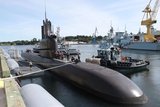
The Sea Lancer system provides a Low Frequency Active (LFA) Variable Depth Sonar (VDS) in a reelable single tow that is ideal for smaller platforms and multi-role ships. (Image: Ultra)
Ultra has received six contracts to study anti-submarine warfare technologies.


Canada’s Department of National Defence has selected Ultra to study and advance a range of Anti-Submarine Warfare technologies.
The six contracts relate to six studies that are to be undertaken as part of the Innovation for Defence Excellence and Security (IDEaS) program.
The IDEaS program seeks innovative solutions to assist acoustic sensor operators to detect, classify, locate and track underwater contacts rapidly and accurately.
These innovative solutions range from tools to assist human operators to rapidly detect underwater contracts from ocean data sources to real-time analysis of measurements obtained from multiple sensors in order to permit the discovery of objects of interest.
Over $176million has been invested in Canada’s science and technology since IDEaS first started in 2018.
The studies Ultra will undertake concern: vector sensors for towed arrays, directional active intercept sensors, sonobuoy deployment from small unmanned aerial vehicles, towed array shape estimation, next-generation environmental sensing and multi-mode free flooded ring transducer technology.
Next-generation anti-submarine warfare is one of Ultra’s strategic technology development areas.

More from Naval Warfare
-
![The UK joins the movement towards joint procurement]()
The UK joins the movement towards joint procurement
The UK will spend an estimated US$3.89 billion over the next decade in joint naval programmes, a lot of which will be in cooperation with Norway.
-
![Rheinmetall’s GMF 140: Ambitious frigate or market misfit?]()
Rheinmetall’s GMF 140: Ambitious frigate or market misfit?
Rheinmetall has unveiled its first next-generation frigate design, showing ambitions to compete as a surface combatant prime contractor. While the company is targeting North America, analysts believe the concept may be better positioned for future European programmes.
-
![US Navy $76.6bn award provides stability for submarine production]()
US Navy $76.6bn award provides stability for submarine production
The US Department of War’s US$76.6 billion Columbia-and Virginia-class submarine contract gives industry demand certainty as Washington seeks to rebuild its shipbuilding base.
-
![US Navy begins SPY-6(V)4 radar testing ahead of first Arleigh Burke destroyer backfit]()
US Navy begins SPY-6(V)4 radar testing ahead of first Arleigh Burke destroyer backfit
Wallops Island trials will validate the next-generation radar's combat system integration before its installation aboard USS Pinckney, the first Flight IIA destroyer to receive the SPY-6(V)4 upgrade.
-
![Hanwha Ocean deepens US ties and eyes Saudi submarine prospect after Canada setback]()
Hanwha Ocean deepens US ties and eyes Saudi submarine prospect after Canada setback
Hanwha Ocean is deepening ties with the US and eyeing a submarine opportunity in Saudi Arabia, as South Korea looks to convert its Canadian defeat into export momentum.