UK welcomes RFA Proteus, the UK’s first dedicated underwater surveillance ship
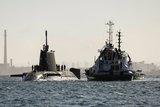
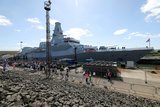
RFA Proteus has a flight deck and a 1,000sqm cargo deck, plus a heavy-duty crane. (Photo: Crown Copyright)
The UK has commemorated the arrival of Royal Fleet Auxiliary (RFA) Proteus, the country's first ship dedicated to underwater surveillance, equipped with advanced capabilities and remotely-operated vehicles (ROVs) for seabed warfare operations.


The ship will be operated by RFA, the UK Royal Navy’s (RN’s) support arm, and was formally dedicated on 10 October. Proteus will serve as a testbed for advancing science and technological development.
The UK MoD committed to the purchase less than year ago as the first ship in its Multi-Role Ocean Surveillance (MROS) programme which includes plans for a second locally-built ship.
The ship was converted from the commercial vessel MV Topaz Tangaroa which was designed and built by Vard. It had previously conducted commercial subsea work, including surveys and operating ROVs.
Since arriving at the Cammell Laird yard in Birkenhead in January, the 6,000t vessel has undergone conversion to fit for purpose.
Crewed by 26 RFA officers and sailors, augmented by 60 Royal Navy specialists responsible for the undersea surveillance, survey and warfare systems, the ship began life as an oil rig-support vessel.
It left Merseyside in September to undergo trials and training off Portland.
It is equipped with a flight deck and a 1,000sqm cargo deck, plus a heavy-duty crane for lifting and lowering operations.


More from Naval Warfare
-
![HMS Anson’s milestone stay in Australia cut short during AUKUS deployment]()
HMS Anson’s milestone stay in Australia cut short during AUKUS deployment
The Astute-class submarine’s visit to Australia was the first time maintenance activity on a UK Royal Navy nuclear submarine had been carried out in the country.
-
![Greece’s newly commissioned FDI frigate deployed to Cyprus]()
Greece’s newly commissioned FDI frigate deployed to Cyprus
The recent naval modernisation efforts by the Hellenic Navy have been bolstered by the acquisition of advanced Naval Group frigates, the first of which was delivered in December 2025 and is now playing a crucial role in the latest Middle East conflict.
-
![US Navy SPY-6 approaches FRP with Raytheon already having “a hot production line”]()
US Navy SPY-6 approaches FRP with Raytheon already having “a hot production line”
Jen Gauthier, Raytheon’s VP of Naval Systems and Sustainment, told Shephard that the company is awaiting the US Navy’s green light to move “fully into full-rate production”.