UK takes command of CTF 150
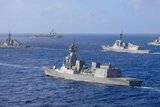
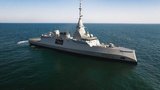
The British Royal Navy has taken command of Combined Task Force (CTF) 150 from the Australian Navy, the UK government announced on 12 April. The CTF is part of the combined maritime forces multi-national naval partnership.
The main mission of CTF 150 is to disrupt terrorist organisations and restrict their freedom of manoeuvre at sea. CTF 150’s vessels will also assist mariners in distress and undertake other humanitarian work.
Michael Fallon, Defence Secretary, UK, said: ‘The UK has one of the strongest navies in the world. Leading this important joint force underlines our commitment, both to working with allies to fight Daesh and to tackling terrorism across the region.’
Cmdre Guy Robinson, deputy commander, British Royal Navy, said: ‘I am hugely grateful for all the hard work done by our Australian and Canadian predecessors and look forward to building on the strong foundations that have already been laid. Through continued close co-operation with the CMF team we will ensure that our efforts contribute effectively towards the achievement of longer-term objectives.’
Robinson will lead personnel from countries such as the UK, Saudi Arabia, Canada and the US.


You may also like

More from Naval Warfare
-
![GMF 140: Rheinmetall’s transatlantic ambitions for NATO’s future surface fleet]()
GMF 140: Rheinmetall’s transatlantic ambitions for NATO’s future surface fleet
Pitched to the US, the guided missile frigate may find its first orders in Germany, Denmark or Belgium as the company seeks a standard design for allied navies.
-
![Schiebel sees progress in South Korea and Greece despite cautious shipbuilders]()
Schiebel sees progress in South Korea and Greece despite cautious shipbuilders
The Camcopter S-300 remains on track for South Korea and was in the hunt in France, but shipbuilders remain guarded, a cooler mood than at Eurosatory.
-
![US Navy explores 3D-printed parts for Growler, Poseidon and Arleigh Burke destroyers]()
US Navy explores 3D-printed parts for Growler, Poseidon and Arleigh Burke destroyers
USN procurement notices point to potential uses for additive manufacturing in naval aviation and shipbuilding.
-
![Who commands the uncrewed systems when the mothership goes down?]()
Who commands the uncrewed systems when the mothership goes down?
In October 2026, the US Navy sent an uncrewed surface vessel to sea with a carrier strike group for the first time. It is a step forward for hybrid operations, but it raises an awkward question: what happens to the drones if the ship controlling them is lost?
-
![Greece’s $8.1 billion naval pipeline signals opportunities beyond frigates]()
Greece’s $8.1 billion naval pipeline signals opportunities beyond frigates
Defence Insight has identified 14 upcoming Greek naval programmes, with submarine replacement, uncrewed systems and longer-term fleet renewal offering potential opportunities for suppliers.