UK MoD awards £348 million OPV contract


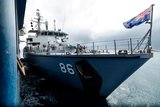
A £348 million contract to build three new Offshore Patrol Vessels (OPVs) for the Royal Navy has gone to BAE Systems, securing some 800 jobs at the company’s Clyde dockyard where the vessels will be built.
The contract, announced on 12 August, follows an earlier commitment of £20 million in March for lead work on the programme.
The new OPVs will feature a redesigned flight deck to operate Merlin helicopters as well as increased storage and accommodation facilities, increasing on the capabilities of the Royal Navy’s current River Class vessels to undertake various tasks in support of UK interests.
Defence Secretary Michael Fallon said: ‘UK warships are only built in UK shipyards. This multi-million pound contract shows our commitment to investing in new ships for the Royal Navy and maintaining in the UK the expertise needed to build the warships of the future. It will benefit the dedicated workers of the Clyde, their families and the local economy in Glasgow.
‘This sort of investment by the UK government is vital for the sustainment of shipbuilding in the city and the hundreds of specialist manufacturing and engineering roles that play an important role in providing war fighting capability for the Royal Navy.’
Chief Secretary to the Treasury Danny Alexander added: ‘I am delighted that we will be building the Royal Navy’s new Offshore Patrol Vessels in Glasgow. Today’s announcement continues over 200 years of tradition building the nation’s leading ships on the Clyde. This will also support hundreds of jobs in the region and make an important contribution to the wider UK economy.’
The contract will help sustain the UK’s shipbuilding capabilities following the completion of the second aircraft carrier, the Prince of Wales.
The first OPV is expected to be handed over to the Royal Navy in 2017.



More from Naval Warfare
-
![Suppliers await next step in Australia’s mine warfare transition]()
Suppliers await next step in Australia’s mine warfare transition
Australia’s mine countermeasure capability remains in flux as the Huon-class nears retirement, but accelerated investment in autonomous systems is opening a path for industry.
-
![Can the US Navy ask Indo-Pacific allies to do more while training with them less?]()
Can the US Navy ask Indo-Pacific allies to do more while training with them less?
As the Iran War draws US ships and marine corps units away from the Indo-Pacific, curtailed exercises and a temporary carrier gap are exposing tensions between Washington’s demand for more self-reliant allies and the joint training needed to realise that ambition.
-
![How could Rheinmetall’s GMF 140 fit with ongoing programmes in North America?]()
How could Rheinmetall’s GMF 140 fit with ongoing programmes in North America?
With Canada committed to its River-class replacement and the USN pursuing a lower-cost frigate, Rheinmetall will need to demonstrate where the GMF 140 can fill a capability gap in the North American fleet.
-
![Australian industry programme builds pipeline for Virginia-class sustainment]()
Australian industry programme builds pipeline for Virginia-class sustainment
Australian businesses can now bid to support Virginia-class submarine sustainment in Western Australia, as momentum around the Henderson Defence Precinct also builds.
-
![South Korea, Japan and Turkey vie for US shipbuilding access in future frigate contest]()
South Korea, Japan and Turkey vie for US shipbuilding access in future frigate contest
Washington’s search for a foreign-built frigate could hand South Korea, Japan and Turkey a larger prize than a double-hull order: a foothold inside the US shipbuilding industrial base.