Third generation of Remus 100 family UUV unveiled
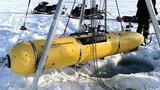
The Remus 130 UUV has become the latest member of the Remus 100 family. (Photo: HII)
The latest iteration is built on 600 UUVs to 30 countries, including 14 NATO members. Nine countries operate the Remus 100 and the Remus 300 is in service with the USN.


Huntington Ingalls Industries (HII) subsidiary Hydroid has developed a new Unmanned Underwater Vehicle (UUV) platform, the Remus 130, as part of the Remus 100 family. The system was unveiled at the Oceanology International 2024 conference in London which will run until 14 March.
The Remus 130 is capable of being carried by two people, can operate to a depth of 100m and has an extended battery life of up to 10 hours for sustained operations with easy field battery change.
The platform, like others in the family, has been designed for mine counter-measures and rescue operations, as well civil operations such as data collection and research and offshore oil and gas exploration. It has also been designed to be modular with open architecture.
The new platform features improved core electronics, navigation and communications systems with modular, open architecture interfaces to accommodate wet or dry payloads, including custom payloads developed by the user.
According to the company, it was introduced to “provide the modularity and open architecture of the REMUS 300 and 620 models at a reduced cost”.
Related Equipment in Defence Insight



More from Naval Warfare
-
![Canada assesses security equipment changes for Polar Icebreaker Imnaryuaq]()
Canada assesses security equipment changes for Polar Icebreaker Imnaryuaq
The Canadian Department of National Defence is evaluating communications and reconnaissance changes for CCGS Imnaryuaq’s expanded maritime security role, while retaining its 2032 acceptance target.
-
![US Navy’s MQ-25 Stingray approaches carrier-integration tests]()
US Navy’s MQ-25 Stingray approaches carrier-integration tests
Boeing has outlined its upcoming precision-landing and carrier-airspace trials as MQ-25 manufacturing shifts towards Illinois, with initial Lot 1 deliveries expected in 2029.
-
![From Poland to the Pacific: can Miecznik become a blueprint for other navies?]()
From Poland to the Pacific: can Miecznik become a blueprint for other navies?
Babcock is taking its Polish industrial partnership approach to Denmark and New Zealand as navies seek sovereign shipbuilding skills alongside ships.
-
![Unsettled waters in the North: can navies still trust their Arctic acoustic maps?]()
Unsettled waters in the North: can navies still trust their Arctic acoustic maps?
The changing Arctic environment is creating new challenges for submarine detection, driving demand for distributed sensors, uncrewed underwater vehicles and real-time acoustic modelling.