Thin-line towed arrays on uncrewed vessels deliver more cost-effective sonar, says SEA
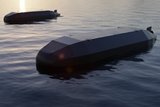
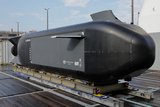
The KraitArray thin-line towed array sonar solution is a way of providing high technology at lower cost. (Photo: SEA)
Miniaturisation of technology opens up radical sensing technologies to smaller navies under submarine threat, according to SEA sonar expert.


Historically, towed array sonar has been a transformative technology, giving beyond-the-horizon awareness of the undersea environment. But such towed arrays have traditionally been large, bulky pieces of equipment, requiring larger crewed vessels to use them.
Now though, technological miniaturisation is producing towed arrays that are small enough for light crewed vessels and even for the new generation of uncrewed vessels to use.
Chris Tucker, sonar product technical authority at SEA, recently explained the advances in towed array technology at the UDT conference in Oslo. Shephard asked him why navies should be looking into it.
“Towed array sonar has always been a
Our news & analysis is now part of Defence Insight®
A Basic-level or higher Defence Insight subscription is now required to view this content.


More from Naval Warfare
-
![RTX confirms US Marine Corps and US Navy acquire Hadalus UUV]()
RTX confirms US Marine Corps and US Navy acquire Hadalus UUV
RTX told Shephard that the Hadalus UUV has been procured by the US Marine Corps and the Office of Naval Research for operational experimentation as the company prepares additional demonstrations with the US Navy, NATO and AUKUS partners.
-
![Europe’s naval contractors benefit from growing refit and upgrade demand]()
Europe’s naval contractors benefit from growing refit and upgrade demand
Rheinmetall’s order to modernise the German Navy frigate Bayern points to a wider European shift towards extending warship service life as new-build programmes face delay.
-
![The UK joins the movement towards joint procurement]()
The UK joins the movement towards joint procurement
The UK will spend an estimated US$3.89 billion over the next decade in joint naval programmes, a lot of which will be in cooperation with Norway.