Thales to support UK Royal Navy fleet communications for next 10 years
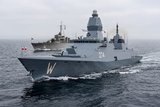
Fleetwide communication, and communication between ship and shore, are critical in the Royal Navy. (Photo: Royal Navy/Crown copyright)
A new deal gives Thales discretionary powers on equipment replacement in the UK Royal Navy (RN) for a decade, saving an estimated £30 million.


Thales UK has won a contract with the UK’s Defence Equipment & Support (DE&S) agency to maintain the RN’s internal and external fleet communications and provide global 24/7 support operations for the next 10 years.
The Maritime Communications Capability Support (MCCS) deal amounts to one of the largest investments in naval communications across Europe. It has been estimated that the new contract will save the RN up to £30m (US$37 million) in through-life costs over the next decade.
Communications failures on RN vessels or at shoreside stations can risk their ability to fulfil their mission objectives, ultimately jeopardising strategic defence outcomes. That means the communication systems deployed by the RN are required to be resilient and robust.
Related Articles
UK upgrades threat detection systems on its Royal Navy warships
Royal Navy’s Type 31 frigate to use half the crew of the Type 23 and embrace automation
Thales has history in ensuring communications resilience for the RN and it previously delivered fleetwide communications services across RN vessels.
The new contract though replaces the previous fleetwide communications contract, which has been in effect for seven years to date.
The projected £30 million of savings, Thales said, will come from significant reductions in red tape, coming as a result of a new “one defence” approach. That means closer collaboration between the RN, the DE&S, and Thales UK.
Thales will be able to circumvent previous equipment replacement processes in the RN infrastructure in order to sustain communications capability long-term. No exact costs for the 10-year contract were released with the announcement of the deal.


More from Naval Warfare
-
![Canada assesses security equipment changes for Polar Icebreaker Imnaryuaq]()
Canada assesses security equipment changes for Polar Icebreaker Imnaryuaq
The Canadian Department of National Defence is evaluating communications and reconnaissance changes for CCGS Imnaryuaq’s expanded maritime security role, while retaining its 2032 acceptance target.
-
![US Navy’s MQ-25 Stingray approaches carrier-integration tests]()
US Navy’s MQ-25 Stingray approaches carrier-integration tests
Boeing has outlined its upcoming precision-landing and carrier-airspace trials as MQ-25 manufacturing shifts towards Illinois, with initial Lot 1 deliveries expected in 2029.
-
![From Poland to the Pacific: can Miecznik become a blueprint for other navies?]()
From Poland to the Pacific: can Miecznik become a blueprint for other navies?
Babcock is taking its Polish industrial partnership approach to Denmark and New Zealand as navies seek sovereign shipbuilding skills alongside ships.
-
![Unsettled waters in the North: can navies still trust their Arctic acoustic maps?]()
Unsettled waters in the North: can navies still trust their Arctic acoustic maps?
The changing Arctic environment is creating new challenges for submarine detection, driving demand for distributed sensors, uncrewed underwater vehicles and real-time acoustic modelling.