Thales systems tested on Mexican vessel


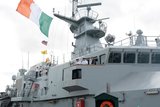
Thales equipment has been put through its paces during Sea Acceptance Trials of the Mexican Navy’s first Pola class vessel.
The trials were carried out in November and December 2019 off the Mexican west coast.
During the trials ARM Reformador faced various surface and air threats, with the vessel’s Thales SMART-S Mk2 radar demonstrating its capabilities in a series of scenarios including sea skimming and supersonic flight.
Following the successful trials, the project’s next milestone is the commissioning of the ship into active service with the Mexican Navy, which is expected in February 2020.
Thales equipment on board ARM Reformador includes the Tacticos combat management system, the SMART-S Mk2 Air and Surface Surveillance Radar, the STIR 1.2 EO Mk2 radar and EO tracking system, the Gatekeeper EO ship security system, and the CAPTAS-2 passive variable depth sonar.
Furthermore the C-Guard Decoy launcher and RIGEL Radar-Electronic Support Measures and Radar-Electronic Counter Measures systems have been supplied and integrated into Tacticos.
Thales also delivered and integrated a full armament suite including RAM surface to air missile launcher, Harpoon surface to surface missile launcher, 57mm gun, 12.7mm machine guns, and Mk38 25mm machine gun with dedicated console.
Related Equipment in Defence Insight

More from Naval Warfare
-
![US turns to allies to tackle navy shipbuilding backlog]()
US turns to allies to tackle navy shipbuilding backlog
A White House memorandum acknowledges US Navy shipbuilding backlogs and a weakened industrial base, opening a formal path for South Korean and Japanese yards to help rebuild capacity.
-
![US Navy’s $275 billion BBGN plan hinges on shipyard transformation]()
US Navy’s $275 billion BBGN plan hinges on shipyard transformation
The US Navy’s planned nuclear-powered warship carries a US$275 billion price tag, but the greater story lies in the industrial overhaul needed to build it, from AI-enabled design to digital twins and modular construction.
-
![Industry sees opportunity in Australia’s shift to networked undersea warfare]()
Industry sees opportunity in Australia’s shift to networked undersea warfare
Australia’s new defence innovation strategy indicates a shift from platform-centric to network-centric undersea warfare, with Ocius and Anduril Industries pointing to fast-growing opportunities for local industry.
-
![Asia-Pacific emerges as the largest export market for US-made USVs]()
Asia-Pacific emerges as the largest export market for US-made USVs
Asian customers have placed one of the largest known international purchases of US-built uncrewed surface vessels, highlighting accelerating regional demand for autonomous maritime capabilities and distributed naval operations.