Sweden takes next step on Visby MLU and next-generation corvette
FMV picks Saab for product definition phase on midlife upgrades and new vessel design


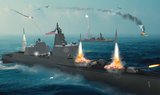
Saab announced on 25 January that it has signed two agreements with Swedish defence procurement agency FMV regarding the next generation of surface ships and corvettes for the Swedish Royal Navy.
The product definition phase for the MLU of five Visby-class corvettes, as well as a product definition phase for Visby Generation 2 corvettes, are worth a combined SEK190 million ($22.91 million).
Saab Kockums will conduct an analysis of requirements as the first step towards the Visby-class MLU and acquisition of Visby Generation 2.
‘The Visby corvettes have been pioneers for 20 years, and after Mid-Life Upgrades they will be well equipped for future assignments. The experience and knowledge that the Visby class has gathered over the years will feed into the development of Visby Generation 2,’ said Lars Tossman, head of Saab Kockums.
Visby Generation 2 will be equipped with a modern anti-ship missile system, torpedo system and air defence missile system. It is designed primarily as the mutirole vessel for littoral and blue water operations but it will also be capable of operating in harsh conditions. This new generation of vessels could enter service as early as 2025, according to Shephard Defence Insight.
The MLU for the Visby class aims to keep the five vessels in service beyond 2040. In addition to modifying existing systems on the corvettes, a new air defence missile system will be installed. The RBS15 anti-ship missile system and torpedo system will also each be upgraded to the latest version.
As part of our promise to deliver comprehensive coverage to our Defence Insight and Premium News subscribers, our curated defence news content provides the latest industry updates, contract awards and programme milestones.
Related Programmes in Defence Insight
Visby Class Replacement Programme
Related Equipment in Defence Insight


More from Naval Warfare
-
![US turns to allies to tackle navy shipbuilding backlog]()
US turns to allies to tackle navy shipbuilding backlog
A White House memorandum acknowledges US Navy shipbuilding backlogs and a weakened industrial base, opening a formal path for South Korean and Japanese yards to help rebuild capacity.
-
![US Navy’s $275 billion BBGN plan hinges on shipyard transformation]()
US Navy’s $275 billion BBGN plan hinges on shipyard transformation
The US Navy’s planned nuclear-powered warship carries a US$275 billion price tag, but the greater story lies in the industrial overhaul needed to build it, from AI-enabled design to digital twins and modular construction.
-
![Industry sees opportunity in Australia’s shift to networked undersea warfare]()
Industry sees opportunity in Australia’s shift to networked undersea warfare
Australia’s new defence innovation strategy indicates a shift from platform-centric to network-centric undersea warfare, with Ocius and Anduril Industries pointing to fast-growing opportunities for local industry.