Sweden’s decision on four new warships inches closer as it eyes UK, France and Spain
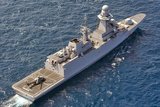
The Royal Swedish Navy currently operates five Visby-class corvettes. (Photo: Jimmie Adamsson/The Swedish Armed Forces)
Sweden decided last year that it wanted a significantly larger warship for its Luleå Class programme than originally planned, with three likely contenders that could potentially deliver within the country’s tight schedule.


Earlier this week, Swedish Minister of Defence Pål Jonson confirmed that the Swedish Defence Materiel Administration (FMV) was likely to make a final decision on its four Luleå-class vessels in the early part of 2026, with an aim of getting the first two frigates into service by 2030, followed by two more in 2035.
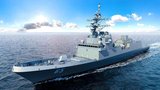
Jonson’s comments on the programme’s “ambitious timeline” came shortly after a meeting with Catherine Vautrin, France’s Minister of the Armed Forces, following on from France’s Naval Group offering its Frégate de Défense et d’Intervention (FDI) last month.
The Royal Swedish Navy (RSwN) currently operates five
Already have an account? Log in
Want to keep reading this article?


More from Naval Warfare
-
![US Navy to deploy UAVs with standard munitions in long-range strikes]()
US Navy to deploy UAVs with standard munitions in long-range strikes
As part of the Runway Independent Maritime & Expeditionary Strike programme, the US Navy is pursuing drones capable of delivering palletised rounds or 1,000lb-class munitions.
-
![Turkey targets Italian market with strategic partnership on USVs and hybrid platforms]()
Turkey targets Italian market with strategic partnership on USVs and hybrid platforms
Havelsan, VN Maritime and Piloda Defence will collaborate to develop and integrate a range of maritime solutions with a view to secure a first procurement contract in Italy in the first half of this year.
-
![Could Asia and the Middle East offer growth opportunities for Italy’s Fincantieri?]()
Could Asia and the Middle East offer growth opportunities for Italy’s Fincantieri?
Export campaigns for Fincantieri’s submarines and frigates are central to the company’s ambitions as billions of dollars in unawarded contracts come into focus.