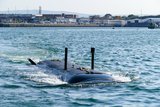
Submarine rescue contract termination triggers investigation
Escape, rescue and abandonment system deal with Phoenix International Australia is cancelled.


The Australian government is conducting an investigation after the Department of Defence terminated a contract for a submarine escape, rescue and abandonment system.
After an open tender, the contract was awarded to Phoenix International Australia in April 2018 for a deployable submarine rescue system on Royal Australian Navy (RAN) Collins- and future Attack-class boats.
However, following a series of delays in 2019 and 2020, Defence initiated an independent review of the project in August 2020.
‘The Government has considered the outcomes and recommendations of the review and has agreed to terminate the contract with Phoenix International Australia by mutual agreement,’ Defence announced on 21 January.
The Department of Defence will now work with Phoenix to reach settlement, which will include addressing arrangements with Phoenix and its subcontractors.
A comprehensive investigation is under way ‘to inform lessons learnt into procurement practices and relevant accountabilities’, Defence noted, adding that the RAN ‘retains a suitable submarine rescue system’ from James Fisher Defence Australia for Collins-class boats.
This can be sustained until the late 2020s when a replacement system will be needed for the new Attack class.
As part of our promise to deliver comprehensive coverage to our Defence Insight and Premium News subscribers, our curated defence news content provides the latest industry updates, contract awards and programme milestones.



More from Naval Warfare
-
![Five years on: where could opportunities emerge next for AUKUS Pillar II?]()
Five years on: where could opportunities emerge next for AUKUS Pillar II?
Payload commonality, combat systems and electronic warfare are emerging as likely priorities as the trilateral partnership balances building submarines with sharing industrial ecosystems.
-
![Singapore expands maritime presence with future-ready Sentinel OPV]()
Singapore expands maritime presence with future-ready Sentinel OPV
Singapore is building space for uncrewed systems and future technologies into its new Sentinel-class OPVs, reflecting a wider move towards adaptable vessels capable of maintaining persistent maritime presence.
-
![From the Baltic to the Gulf: where USV procurement is heading next]()
From the Baltic to the Gulf: where USV procurement is heading next
Saildrone’s new Copenhagen base is one sign of a larger shift, as navies globally turn to uncrewed vessels for surveillance and mine clearance.
-
![Israeli Navy looks to expand as war reshapes future force requirements]()
Israeli Navy looks to expand as war reshapes future force requirements
Israel’s navy is preparing for a larger and more technically diverse role, but its ambitions could be impacted by supply chain restrictions, accelerating demand for domestic naval production as well as autonomous maritime capabilities.
-
![Quantum sensing gathers pace as navies eye undersea advantage]()
Quantum sensing gathers pace as navies eye undersea advantage
As AI dominates defence conversations, industry increasingly points to quantum sensing as the technology set to change submarine and uncrewed underwater vehicle operations.