Star Safire ordered for USCG HC-144


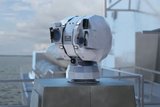
FLIR Systems will supply eight Star Safire 380HD electro-optical infrared (EO/IR) sensors for the US Coast Guard’s (USCG’s) HC-144 Ocean Sentry surveillance aircraft, the USCG announced on 16 May. The order has a value of around $6 million.
The EO/IR sensors will improve the aircraft’s detection and identification capabilities. The units are compatible with Minotaur mission system architecture and will increase commonality among the coast guard’s fixed wing platforms, including the C-27J Spartan medium range surveillance aircraft and HC-130J Super Hercules long range surveillance aircraft.
The first unit for the HC-144 acquisition was delivered in April, with delivery of the remaining units planned by the end of 2017.
The HC-144 Ocean Sentry turboprop aircraft has an endurance of over 10 hours and an extensive sensor capability that helps the coast guard fulfill its maritime patrol, drug and migrant interdiction, disaster response and search and rescue missions more effectively.
Related Equipment in Defence Insight



More from Naval Warfare
-
![Force renewal in the Royal Canadian Navy opens long-term opportunities for suppliers]()
Force renewal in the Royal Canadian Navy opens long-term opportunities for suppliers
Canada's ambitious naval modernisation plans are creating major maritime procurement opportunities, with future programmes also promising long-term work for domestic and international shipbuilders.
-
![The unanswered design question at the heart of India’s P75I submarine programme]()
The unanswered design question at the heart of India’s P75I submarine programme
ThyssenKrupp Marine Systems is edging toward an India submarine deal, but an unverified claim of a radically new hull design – at odds with the proven lineage it has marketed to Canada – has yet to be resolved.
-
![Critical infrastructure protection fuels growth in maritime counter-drone market]()
Critical infrastructure protection fuels growth in maritime counter-drone market
Operational lessons are pushing navies towards counter-uncrewed aerial systems at sea, creating a fast-emerging industrial opportunity for radar and effector makers.