Spain addresses future submarine rescue requirement
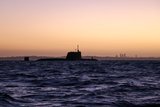
A new submarine rescue ship for the Spanish Navy will replace Neptuno (pictured). (Photo: Spanish Navy)
Navantia will deliver a new submarine rescue vessel for the Spanish Navy by mid-2025.


The Spanish MoD on 5 November signed a contract for Navantia to build a new submarine rescue vessel at its Puerto Real shipyard.
The Buque de Acción Marítima de Intervención Subacuática (BAM-IS) will replace the Neptuno, which is nearing the end of its service life with the Spanish Navy.
While the value of the deal (announced on the final day of the FEINDEF exhibition in Madrid) was not disclosed, the MoD stated that it expects the new vessel to be delivered in 42 months’ time.
The contract covers construction of the new vessel plus the acquisition and integration of underwater intervention equipment.
‘The integration of the systems, sensors and equipment it [BAM-IS] must carry to address its wide range of missions will mean a new technological advance for Navantia,’ the MoD added.
Related Programmes in Defence Insight
Underwater Intervention Maritime Action Vessel (BAM-IS) [Spain]
Related Equipment in Defence Insight
Poseidón - Underwater Intervention Maritime Action Vessel (BAM-IS)


More from Naval Warfare
-
![Five years on: where could opportunities emerge next for AUKUS Pillar II?]()
Five years on: where could opportunities emerge next for AUKUS Pillar II?
Payload commonality, combat systems and electronic warfare are emerging as likely priorities as the trilateral partnership balances building submarines with sharing industrial ecosystems.
-
![Singapore expands maritime presence with future-ready Sentinel OPV]()
Singapore expands maritime presence with future-ready Sentinel OPV
Singapore is building space for uncrewed systems and future technologies into its new Sentinel-class OPVs, reflecting a wider move towards adaptable vessels capable of maintaining persistent maritime presence.
-
![From the Baltic to the Gulf: where USV procurement is heading next]()
From the Baltic to the Gulf: where USV procurement is heading next
Saildrone’s new Copenhagen base is one sign of a larger shift, as navies globally turn to uncrewed vessels for surveillance and mine clearance.
-
![Israeli Navy looks to expand as war reshapes future force requirements]()
Israeli Navy looks to expand as war reshapes future force requirements
Israel’s navy is preparing for a larger and more technically diverse role, but its ambitions could be impacted by supply chain restrictions, accelerating demand for domestic naval production as well as autonomous maritime capabilities.
-
![Quantum sensing gathers pace as navies eye undersea advantage]()
Quantum sensing gathers pace as navies eye undersea advantage
As AI dominates defence conversations, industry increasingly points to quantum sensing as the technology set to change submarine and uncrewed underwater vehicle operations.