South Korea chooses LIG Nex1 for reconnaissance USV
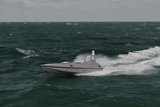
The SeaSword 2, one of LIG Nex1's uncrewed vessels. (Photo: LIG Nex1)
The uncrewed surface vessel was secured with a DAPA contract.


The South Korean Navy (ROKN) has contracted local shipbuilder LIG Nex1 to develop a new reconnaissance unmanned surface vehicle (USV) by 2027.
LIG Nex1 won the Defense Acquisition Program Administration (DAPA) contract for the project to develop the reconnaissance USV, which is valued at 39.86 billion KRW (US$274 million).
The project is intended to enhance South Korea’s surveillance and reconnaissance capabilities, as well as its rapid response abilities for forward naval bases and key ports.
Related Articles
South Korean Destroyer fleet approved for US improvement programme
Hanwha Ocean to build FFX Batch-IV frigates for South Korea
LIG Nex1 will actually produce not one USV but two under the contract, each of 12 metres in length.
The project is a key part of developing the ROKN’s future integrated crewed-uncrewed combat system, the “Navy Sea GHOST”.
LIG Nex1 won the contract on the strength of its significant uncrewed systems experience – it has been developing the “Sea Sword” series of unmanned surface vehicles under civilian-military projects since 2015.
The new USVs are expected to become flagship defence export products for South Korea once they have been developed and deployed with the ROKN. The intention is that they will use a modular approach to weapons and detection systems, which will make them saleable in a broad range of customers with varying mission profile needs.
LIG Next 1 said it had plans to develop future functionality for the USVs that would include integration with low-earth-orbit commercial satellites, to allow the vessels to expand their operational range.
The announcement from the ROKN is the second significant marker in a week. Just days earlier, South Korea announced that Hanwha Ocean had been selected to build the first two of its new FFX Batch-IV frigates.

More from Naval Warfare
-
![HMS Anson’s milestone stay in Australia cut short during AUKUS deployment]()
HMS Anson’s milestone stay in Australia cut short during AUKUS deployment
The Astute-class submarine’s visit to Australia was the first time maintenance activity on a UK Royal Navy nuclear submarine had been carried out in the country.
-
![US Pentagon claims to have severely damaged Iranian capabilities, promises to increase attacks]()
US Pentagon claims to have severely damaged Iranian capabilities, promises to increase attacks
US military authorities claim to have sunk 20 Iranian vessels and destroyed Tehran’s Air Force, with the Pentagon making plans to send additional assets to the region.
-
![Greece’s newly commissioned FDI frigate deployed to Cyprus]()
Greece’s newly commissioned FDI frigate deployed to Cyprus
The recent naval modernisation efforts by the Hellenic Navy have been bolstered by the acquisition of advanced Naval Group frigates, the first of which was delivered in December 2025 and is now playing a crucial role in the latest Middle East conflict.