South Korea awards warship contracts and readies SAM for production
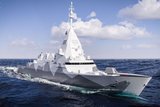
An artist’s rendering of the upcoming FFX Batch III class of frigate destined for the ROK Navy. (HHI)
South Korea is a hotbed of naval activity - with frigates, destroyers, submarines and new SAMs all under construction.


South Korea has an active naval shipbuilding programme, and one of the latest recipients of a contract is SamKang M&T for a 3,500t FFX Batch III frigate.
Samkang M&T is South Korea’s leading ship repairer that took over the shipyard of bankrupt STX Offshore & Shipbuilding in 2017. The company announced on 4 January that it had won this KRW33.5 billion ($30.2 million) frigate contract from the Defense Acquisition Program Administration (DAPA).
Moo Seok Song, chairman of the company, said: ‘Samkang has acquired sufficient technology for naval ships since we constructed ten patrol ships for the Korea Coast Guard.’
This
Our news & analysis is now part of Defence Insight®
A Basic-level or higher Defence Insight subscription is now required to view this content.



More from Naval Warfare
-
![As uncrewed naval systems advance, capabilities to counter them are emerging]()
As uncrewed naval systems advance, capabilities to counter them are emerging
Research programmes and system procurement efforts to counter uncrewed surface and underwater vehicle threats are accelerating as naval drone uptake spreads.
-
![US Coast Guard to receive the first three Offshore Patrol Cutters in FY2026 and FY2027]()
US Coast Guard to receive the first three Offshore Patrol Cutters in FY2026 and FY2027
After recording a nearly six-year delay in the OPC schedule, the USCG intends to advance with the programme, reaching multiple milestones in the short term.
-
![Japan’s first warship sale opens door to future exports but comes with strings attached]()
Japan’s first warship sale opens door to future exports but comes with strings attached
Australia’s selection of an upgraded Mogami-class frigate marks Japan’s first-ever export of a major surface combatant. With an ambitious 2029 delivery target, the deal could open the door to further naval exports – but inexperience and geopolitical friction with China loom large.