Sonardyne upgrades Sentinel IDS


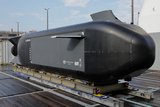
A new portable variant of Sonardyne’s Sentinel diver detection sonar has been installed at an undisclosed coastal facility in the Middle East, the company announced on 7 April.
Sentinel has been upgraded to enable a single sonar processor topside unit to command each in-water sonar head, halving the previous number needed.
Sentinel is designed to provide underwater surveillance to prevent unauthorised access to military and high security facilities from under the water. It can identify divers and unmanned underwater vehicles approaching ports, harbours, critical national infrastructure, offshore energy platforms and private yachts.
The system uses acoustic signature classification techniques to classify the type of threat detected. Targets are automatically separated from non-threats such as fauna, cetacean, fish and flotsam, ensuring a low false alarm rate and maximum response time for security teams.
Sentinel’s small, lightweight sonar head can be permanently deployed on the seabed, from a jetty or over the side of a patrol vessel and once configured, can be left to run autonomously. It can be used as a standalone security measure or integrated with CCTV, radar and other sensors to enhance the situational awareness picture for large waterside facilities.
The new upgrades will allow users who need a rapidly deployable maritime security capability to protect waterside facilities and vessels against the threat of attack.
Nick Swift, business manager for maritime security, Sonardyne, said: ‘The introduction of a new, more powerful sonar processor for Sentinel demonstrates our commitment to ensuring that, as the threat landscape changes, our underwater technology evolves to keep pace with end-users’ requirements. The reduced footprint of the single head system now makes Sentinel IDS even more suitable for both rapid deployment and permanent installations.’


More from Naval Warfare
-
![FNSS looks to put uncrewed vehicles at the front of amphibious assaults]()
FNSS looks to put uncrewed vehicles at the front of amphibious assaults
The new platform is designed to put reconnaissance, obstacle clearance and fire support ahead of the crewed force in a contested landing.
-
![US turns to allies to tackle navy shipbuilding backlog]()
US turns to allies to tackle navy shipbuilding backlog
A White House memorandum acknowledges US Navy shipbuilding backlogs and a weakened industrial base, opening a formal path for South Korean and Japanese yards to help rebuild capacity.
-
![US Navy’s $275 billion BBGN plan hinges on shipyard transformation]()
US Navy’s $275 billion BBGN plan hinges on shipyard transformation
The US Navy’s planned nuclear-powered warship carries a US$275 billion price tag, but the greater story lies in the industrial overhaul needed to build it, from AI-enabled design to digital twins and modular construction.