Second Gowind corvette delivered to UAE
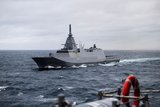
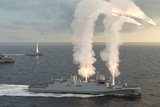
The handover of Al Emarat took place on 27 June. (Photo: Naval Group)
The Gowind 2500 corvettes, designed and built by France’s Naval Group, combine stealth features, resilience and high availability with anti-air, anti-submarine and anti-ship warfare capabilities.


The second Gowind corvette for the UAE Navy, Al Emarat, has been delivered after completing sea trials which began in October last year after launching in May 2022.
Two of the corvettes were ordered in 2019 with the first, Bani Yas, delivered in late November 2023. There is an option for a further two ships.
The Al Emarat crew will continue operational ship training in France as part of the contract with Naval Group. The ship will begin its transit to the UAE under the Emirati flag in July, with an expected arrival in Abu Dhabi in August.
Eleven Gowind-family corvettes are in service or ordered by several navies and the Gowind 2500, around which the UAE variant is based on, is also in service with the Egyptian Navy.
The UAE ships measure 102m with an overall beam of 16m and a displacement of 2,800t.
Shephard Defence Insight notes that armament includes an Oto Melara 76mm main gun, two R400S-Mk2 RWS, 16 MICA VLS, eight Exocet MM40s, torpedo launchers for MU90, a RIM-116 RAM missile launcher system fitted over the hangar, Rheinmetall MASS countermeasure system and Naval Group’s CANTO anti-torpedo system.
Related Programmes in Defence Insight
Related Equipment in Defence Insight

More from Naval Warfare
-
![Australian industry programme builds pipeline for Virginia-class sustainment]()
Australian industry programme builds pipeline for Virginia-class sustainment
Australian businesses can now bid to support Virginia-class submarine sustainment in Western Australia, as momentum around the Henderson Defence Precinct also builds.
-
![South Korea, Japan and Turkey vie for US shipbuilding access in future frigate contest]()
South Korea, Japan and Turkey vie for US shipbuilding access in future frigate contest
Washington’s search for a foreign-built frigate could hand South Korea, Japan and Turkey a larger prize than a double-hull order: a foothold inside the US shipbuilding industrial base.
-
![Japan’s FY2027 budget bets on stand-off systems to offset demographic decline]()
Japan’s FY2027 budget bets on stand-off systems to offset demographic decline
Japan’s FY2027 defence budget backs stand-off strike, a 17-aircraft MQ-9B buy and a declared bid to lead the world in uncrewed maritime assets, alongside new frigates, submarines and support ships.