SEA to trial sonar software for UK Royal Navy
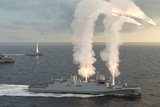
SEA’s software will be trialled on UK Royal Navy Type 23 ships. (Photo: Royal Navy)
The UK Royal Navy’s anti-submarine warfare Spearhead programme, run by the service’s Develop Directorate, has been investigating future and existing technologies with a particular focus on the USV arena.


Anti-submarine warfare (ASW) company SEA will demonstrate a software application which determines optimum deployment depth of an active sonar projector and receiving array, depending on its underwater environment, as part of the UK MoD’s Spearhead ASW programme.
UK-based SEA will contribute additional concepts to the Spearhead programme, working with prime contractor Thales Underwater Systems, to provide the UK Royal Navy with ways to exploit both existing and enhanced systems in underwater warfare scenarios. Trials will be expected to take place later this year.
In 2023, as part of Spearhead, UK multi-static sonar capability was tested by Type 23 frigate HMS Richmond and Merlin Mk2 helicopters in waters off England’s southern coast, alongside industry partners Dstl, Thales, QinetiQ, BAE Systems and Ultra.
In 2022, once again under Spearhead, the RN ordered its first uncrewed submarine as part of an effort to develop a new concept for underwater operations. The XLAUV, bought under Project Cetus, will monitor adversaries, listen for ships and submarines, and keep tabs on critical national infrastructure on the seabed such as cables and pipelines.



More from Naval Warfare
-
![How France’s SNLE 3G programme is reshaping the naval nuclear industrial base]()
How France’s SNLE 3G programme is reshaping the naval nuclear industrial base
Extending far beyond a four-submarine replacement programme, France’s ballistic missile submarine effort is a decades-long industrial initiative designed to preserve the country’s ability to build and sustain nuclear-powered strategic platforms.
-
![Suppliers await next step in Australia’s mine warfare transition]()
Suppliers await next step in Australia’s mine warfare transition
Australia’s mine countermeasure capability remains in flux as the Huon-class nears retirement, but accelerated investment in autonomous systems is opening a path for industry.
-
![Can the US Navy ask Indo-Pacific allies to do more while training with them less?]()
Can the US Navy ask Indo-Pacific allies to do more while training with them less?
As the Iran War draws US ships and marine corps units away from the Indo-Pacific, curtailed exercises and a temporary carrier gap are exposing tensions between Washington’s demand for more self-reliant allies and the joint training needed to realise that ambition.
-
![How could Rheinmetall’s GMF 140 fit with ongoing programmes in North America?]()
How could Rheinmetall’s GMF 140 fit with ongoing programmes in North America?
With Canada committed to its River-class replacement and the USN pursuing a lower-cost frigate, Rheinmetall will need to demonstrate where the GMF 140 can fill a capability gap in the North American fleet.