Royal Navy welcomes mine-hunting mothership
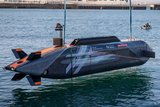
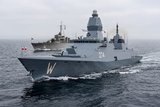
The MoD has previously mentioned plans to acquire an additional three ships for mine countermeasures from 2025. (Photo: MoD)
RFA Stirling Castle, a 6,000-tonne vessel, will start operations later this year.


The Royal Navy has welcomed RFA Stirling Castle, a mine-hunting mothership, into its fleet.The ship will deploy systems to gather data, locate, identify and neutralise mines, as well as other underwater explosives.
Motherships function as a host vessel for remotely operated and autonomous systems used by the Royal Navy. RFA Stirling Castle was procured by the UK Ministry of Defence’s Defence Equipment and Support (DE&S) as part of the Mine Hunting Capability programme (MHC).
Equipment capable of being operated remotely, including new autonomous surface vessels and uncrewed underwater vehicles (UUV), has also been procured by DE&S/ The ship will be able to carry the remote command centres for the unmanned vessels and vehicles, and will have the capability to store, prepare and deploy the vessels and vehicles.
RFA Stirling Castle was conversed at Devonport having previously operated as an oil rig support vessel under the name of MV Island Crown.
Related Equipment in Defence Insight




More from Naval Warfare
-
![All eyes on Royal Navy’s Type 93 market engagement as industry prepares bids]()
All eyes on Royal Navy’s Type 93 market engagement as industry prepares bids
Responses are due by 29 October as the Royal Navy tests the market, with BAE Systems’ Herne and MSubs’ Excalibur setting up a contest where payloads may decide the winner.
-
![US Navy’s MQ-25 Stingray approaches carrier-integration tests]()
US Navy’s MQ-25 Stingray approaches carrier-integration tests
Boeing has outlined its upcoming precision-landing and carrier-airspace trials as MQ-25 manufacturing shifts towards Illinois, with initial Lot 1 deliveries expected in 2029.
-
![From Poland to the Pacific: can Miecznik become a blueprint for other navies?]()
From Poland to the Pacific: can Miecznik become a blueprint for other navies?
Babcock is taking its Polish industrial partnership approach to Denmark and New Zealand as navies seek sovereign shipbuilding skills alongside ships.