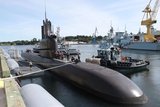
Royal Navy of Oman fires MBDA’s VL MICA missile


MBDA’s VL MICA missile has been successfully operationally fired from the Royal Navy of Oman’s (RNO’s) Al Shamikh Ocean Patrol Vessel (OPV).
The firing took place off the coast of the Ile du Levant in the Mediterranean Sea at the French DGA’s test range under the supervision and control of the DGA-EM.
According to MBDA, the firing saw the VL MICA missile successfully intercept and destroy the target at very low altitude. The target was simulating a sea skimming anti-ship missile.
VL MICA is the latest generation of air defence systems and deploys the MICA missile vertically launched from a canister which serves for both storage and launch purposes. In its naval version, VL MICA provides both area air defence as well as self-defence of the host vessel. MICA fire-and-forget missiles can be equipped with either IR or radar seekers and are capable of dealing with the full range of airborne threats as well as saturating attacks.
The company said the success of this firing is evidence of the operational capability of the RNO with its new vessel and weapon system.

More from Naval Warfare
-
![The UK joins the movement towards joint procurement]()
The UK joins the movement towards joint procurement
The UK will spend an estimated US$3.89 billion over the next decade in joint naval programmes, a lot of which will be in cooperation with Norway.
-
![Rheinmetall’s GMF 140: Ambitious frigate or market misfit?]()
Rheinmetall’s GMF 140: Ambitious frigate or market misfit?
Rheinmetall has unveiled its first next-generation frigate design, showing ambitions to compete as a surface combatant prime contractor. While the company is targeting North America, analysts believe the concept may be better positioned for future European programmes.
-
![US Navy $76.6bn award provides stability for submarine production]()
US Navy $76.6bn award provides stability for submarine production
The US Department of War’s US$76.6 billion Columbia-and Virginia-class submarine contract gives industry demand certainty as Washington seeks to rebuild its shipbuilding base.
-
![US Navy begins SPY-6(V)4 radar testing ahead of first Arleigh Burke destroyer backfit]()
US Navy begins SPY-6(V)4 radar testing ahead of first Arleigh Burke destroyer backfit
Wallops Island trials will validate the next-generation radar's combat system integration before its installation aboard USS Pinckney, the first Flight IIA destroyer to receive the SPY-6(V)4 upgrade.
-
![Hanwha Ocean deepens US ties and eyes Saudi submarine prospect after Canada setback]()
Hanwha Ocean deepens US ties and eyes Saudi submarine prospect after Canada setback
Hanwha Ocean is deepening ties with the US and eyeing a submarine opportunity in Saudi Arabia, as South Korea looks to convert its Canadian defeat into export momentum.