RCN takes delivery of second Harry DeWolf-class AOPS
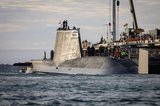
The future HMCS Margaret Brooke being moved from the Bedford Basin to Irving Shipyard in Halifax. (Photo: RCN)
The Harry DeWolf-class Arctic and Offshore Patrol Ships will bolster the Royal Canadian Navy’s presence in the high north.


The RCN has accepted delivery of the second of six Harry DeWolf-class AOPS, the future HMCS Margaret Brooke.
Canadian Minister of National Defence Harjit Sajjan said: ‘The delivery of this ship is a testament to the hard work and perseverance of Canadian shipbuilders despite the ongoing challenges of the COVID-19 pandemic, and will help to ensure our navy is equipped with the modern ships it needs to assert Arctic sovereignty for years to come.’
The AOPS is designed with a thick hull able to operate in first-year sea ice up to 120cm thick, providing the RCN enhanced access to the Arctic.
The future HMCS Margaret Brooke will remain docked at the CFB Halifax Dockyard whilst post-acceptance and final ship preparation works are completed.
The RCN is due to host a naming ceremony later this year, with a view to formal commissioning in Autumn 2022.
The following three vessels are currently under construction. Work will begin on the sixth ship in 2022.
The RCN commissioned its first AOPS, HMCS Harry DeWolf, in June.
Related Equipment in Defence Insight



More from Naval Warfare
-
![Five years on: where could opportunities emerge next for AUKUS Pillar II?]()
Five years on: where could opportunities emerge next for AUKUS Pillar II?
Payload commonality, combat systems and electronic warfare are emerging as likely priorities as the trilateral partnership balances building submarines with sharing industrial ecosystems.
-
![Singapore expands maritime presence with future-ready Sentinel OPV]()
Singapore expands maritime presence with future-ready Sentinel OPV
Singapore is building space for uncrewed systems and future technologies into its new Sentinel-class OPVs, reflecting a wider move towards adaptable vessels capable of maintaining persistent maritime presence.
-
![From the Baltic to the Gulf: where USV procurement is heading next]()
From the Baltic to the Gulf: where USV procurement is heading next
Saildrone’s new Copenhagen base is one sign of a larger shift, as navies globally turn to uncrewed vessels for surveillance and mine clearance.
-
![Israeli Navy looks to expand as war reshapes future force requirements]()
Israeli Navy looks to expand as war reshapes future force requirements
Israel’s navy is preparing for a larger and more technically diverse role, but its ambitions could be impacted by supply chain restrictions, accelerating demand for domestic naval production as well as autonomous maritime capabilities.
-
![Quantum sensing gathers pace as navies eye undersea advantage]()
Quantum sensing gathers pace as navies eye undersea advantage
As AI dominates defence conversations, industry increasingly points to quantum sensing as the technology set to change submarine and uncrewed underwater vehicle operations.