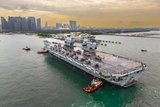
RAN’s third destroyer completes sea trials


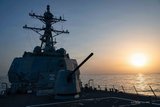
The Royal Australian Navy’s third Air Warfare Destroyer (AWD), NUSHIP Sydney, has completed sea trials, the Australian Department of Defence announced on 9 November.
Final production work on the vessel, including the integration of the MH-60R helicopter, will now be completed ahead of the ship’s delivery and provisional acceptance into service in February 2020.
Sydney is the third and final Hobart class ship being delivered by the Air Warfare Destroyer Alliance which includes the Department of Defence, Raytheon Australia and ASC Shipbuilding supported by Navantia Australia.
Minister for Defence, Linda Reynolds, said: ‘Today’s milestone is another example of the Liberal and National Government’s successful initiative to reform the AWD programme, setting the scene for the Naval Shipbuilding Plan. Sydney will enter into service early next year, and with her sister-ships HMA Ships Hobart and Brisbane, they will be the most potent warships to date.
‘By using a combination of Australian and globally proven technologies, these highly capable warships are truly world-class and will allow us to work even closer with our allies.’
Related Equipment in Defence Insight

You may also like
More from Naval Warfare
-
![US Navy begins SPY-6(V)4 radar testing ahead of first Arleigh Burke destroyer backfit]()
US Navy begins SPY-6(V)4 radar testing ahead of first Arleigh Burke destroyer backfit
Wallops Island trials will validate the next-generation radar's combat system integration before its installation aboard USS Pinckney, the first Flight IIA destroyer to receive the SPY-6(V)4 upgrade.
-
![Hanwha Ocean deepens US ties and eyes Saudi submarine prospect after Canada setback]()
Hanwha Ocean deepens US ties and eyes Saudi submarine prospect after Canada setback
Hanwha Ocean is deepening ties with the US and eyeing a submarine opportunity in Saudi Arabia, as South Korea looks to convert its Canadian defeat into export momentum.
-
![A400M trial demonstrates airborne deployment of uncrewed surface vessel]()
A400M trial demonstrates airborne deployment of uncrewed surface vessel
Kraken Technology Group’s A400M airdrop of a K3 Scout uncrewed surface vessel points to a new way for navies to insert USVs into contested waters, bypassing ports and motherships.
-
![Babcock onshores 85% of Canada’s submarine supply chain as it eyes future CPSP programme]()
Babcock onshores 85% of Canada’s submarine supply chain as it eyes future CPSP programme
By moving most of the Royal Canadian Navy’s submarine supply chain into Canada, Babcock Canada is driving to strengthen sovereign sustainment capabilities while preparing to compete to maintain the future Canadian Patrol Submarine Project.
-
![From the seas to the web: the changing shape of UK defence in Southeast Asia]()
From the seas to the web: the changing shape of UK defence in Southeast Asia
As his final engagement before leaving his post as the head of the British defence staff for Southeast Asia and defence adviser to Singapore, Brigadier Eddie Maskell-Pedersen spoke with Shephard about maritime security, cyber cooperation and long-term partnerships.