RAN’s third destroyer completes sea trials


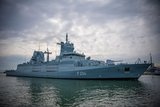
The Royal Australian Navy’s third Air Warfare Destroyer (AWD), NUSHIP Sydney, has completed sea trials, the Australian Department of Defence announced on 9 November.
Final production work on the vessel, including the integration of the MH-60R helicopter, will now be completed ahead of the ship’s delivery and provisional acceptance into service in February 2020.
Sydney is the third and final Hobart class ship being delivered by the Air Warfare Destroyer Alliance which includes the Department of Defence, Raytheon Australia and ASC Shipbuilding supported by Navantia Australia.
Minister for Defence, Linda Reynolds, said: ‘Today’s milestone is another example of the Liberal and National Government’s successful initiative to reform the AWD programme, setting the scene for the Naval Shipbuilding Plan. Sydney will enter into service early next year, and with her sister-ships HMA Ships Hobart and Brisbane, they will be the most potent warships to date.
‘By using a combination of Australian and globally proven technologies, these highly capable warships are truly world-class and will allow us to work even closer with our allies.’
Related Equipment in Defence Insight

You may also like

More from Naval Warfare
-
![Japan’s FY2027 budget bets on stand-off systems to offset demographic decline]()
Japan’s FY2027 budget bets on stand-off systems to offset demographic decline
Japan’s FY2027 defence budget backs stand-off strike, a 17-aircraft MQ-9B buy and a declared bid to lead the world in uncrewed maritime assets, alongside new frigates, submarines and support ships.
-
![Russia’s uncrewed boat portfolio hints at future naval demand]()
Russia’s uncrewed boat portfolio hints at future naval demand
Ukrainian intelligence has catalogued more than 20 Russian uncrewed surface vessels, revealing a portfolio weighted towards mine warfare and logistics, with implications for Western naval investment.
-
![Ukraine’s new long-range 12m autonomous vessel can deploy other drones]()
Ukraine’s new long-range 12m autonomous vessel can deploy other drones
Ukraine’s UForce unveiled the MV11 uncrewed surface vessel, designed to launch and support other naval drones at sea, fuelling debate over the future of autonomous maritime task groups.
-
![Global submarine suppliers compete for a rapidly shrinking market]()
Global submarine suppliers compete for a rapidly shrinking market
Diminishing submarine competitions worldwide are leaving fewer acquisition opportunities, pushing contractors toward alternatives.