Modular Type 32 design could gain inspiration from Type 31 frigate
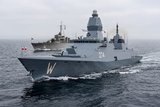
The Type 31 programme entered the Whole Ship Engineering Phase in 2020. (Photo: Babcock)
The planned class of warship will have an ASW capability in addition to acting as a mothership for autonomous MCM systems.


With the UK RN due to retire its Hunt- and Sandown-class mine countermeasure vessels (MCMVs) from 2023, and with the Defence Command Paper finally confirming that there will be no like-for-like replacement, time is tight to ensure that there will not be a gapping of such a crucial capability.
Given that two of the UK’s shipbuilding primes — BAE Systems on the River Clyde and Babcock at Rosyth — are already busy with Type 26 and Type 31 programmes respectively, the design and build options further exacerbate the MCM timeline.
Babcock’s Type 31 frigate programme was revealed in August 2020
Our news & analysis is now part of Defence Insight®
A Basic-level or higher Defence Insight subscription is now required to view this content.



More from Naval Warfare
-
![Autonomy gives Turkey a chance to outflank established naval shipbuilders]()
Autonomy gives Turkey a chance to outflank established naval shipbuilders
Turkish shipbuilders have sold ships from Asia to Europe, but autonomy and swarm technology could give them a fairer fight against Western European rivals.
-
![Canada assesses security equipment changes for Polar Icebreaker Imnaryuaq]()
Canada assesses security equipment changes for Polar Icebreaker Imnaryuaq
The Canadian Department of National Defence is evaluating communications and reconnaissance changes for CCGS Imnaryuaq’s expanded maritime security role, while retaining its 2032 acceptance target.
-
![All eyes on Royal Navy’s Type 93 market engagement as industry prepares bids]()
All eyes on Royal Navy’s Type 93 market engagement as industry prepares bids
Responses are due by 29 October as the Royal Navy tests the market, with BAE Systems’ Herne and MSubs’ Excalibur setting up a contest where payloads may decide the winner.
-
![US Navy’s MQ-25 Stingray approaches carrier-integration tests]()
US Navy’s MQ-25 Stingray approaches carrier-integration tests
Boeing has outlined its upcoming precision-landing and carrier-airspace trials as MQ-25 manufacturing shifts towards Illinois, with initial Lot 1 deliveries expected in 2029.
-
![From Poland to the Pacific: can Miecznik become a blueprint for other navies?]()
From Poland to the Pacific: can Miecznik become a blueprint for other navies?
Babcock is taking its Polish industrial partnership approach to Denmark and New Zealand as navies seek sovereign shipbuilding skills alongside ships.