Photos show new sensors and defensive weapons on Turkish Gabya-class frigates
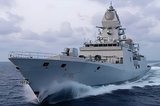
TCG Gaziantep sails through the Izmit Gulf in August 2022 with newly installed Ahtapot EO sensor and STAMP-2 RCWS on board. (Photo: Oğuz Eroğuz)
Images have emerged of Aselsan Ahtapot electro-optic sensor suites and STAMP-2 remote-controlled weapon stations (RCWS) installed on Gabya-class frigates of the Turkish Navy.


Turkey’s Gabya-class frigates have received a number of major upgrades and changes since the early 2000s.
Following the GENESIS modernisation programme for the ships’ combat management system, completed in 2012, four of the class were fitted with eight-cell MK-41 VLS for RIM-162 ESSM missiles and a SMART-S Mk 2 3D radar instead of the legacy AN/SPS-49(V)4.
The Turkish Navy clearly sees still potential for upgrading this class of ship. In May 2022 during the Mavi Vatan 22 naval exercise, TCG Gökçeada was spotted fitted with an Aselsan Ahtapot EO reconnaissance and surveillance system on a pedestal on the roof of the
Our news & analysis is now part of Defence Insight®
A Basic-level or higher Defence Insight subscription is now required to view this content.
More from Naval Warfare
-
![How France’s SNLE 3G programme is reshaping the naval nuclear industrial base]()
How France’s SNLE 3G programme is reshaping the naval nuclear industrial base
Extending far beyond a four-submarine replacement programme, France’s ballistic missile submarine effort is a decades-long industrial initiative designed to preserve the country’s ability to build and sustain nuclear-powered strategic platforms.
-
![China’s mineral processing dominance exposes naval supply chain vulnerabilities]()
China’s mineral processing dominance exposes naval supply chain vulnerabilities
Competition for critical minerals, and China’s dominance of their processing, is emerging as a decisive factor in future naval procurement programmes.
-
![Suppliers await next step in Australia’s mine warfare transition]()
Suppliers await next step in Australia’s mine warfare transition
Australia’s mine countermeasure capability remains in flux as the Huon-class nears retirement, but accelerated investment in autonomous systems is opening a path for industry.
-
![Can the US Navy ask Indo-Pacific allies to do more while training with them less?]()
Can the US Navy ask Indo-Pacific allies to do more while training with them less?
As the Iran War draws US ships and marine corps units away from the Indo-Pacific, curtailed exercises and a temporary carrier gap are exposing tensions between Washington’s demand for more self-reliant allies and the joint training needed to realise that ambition.