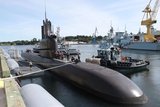
New Zealand to get new littoral ship
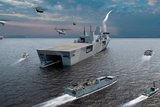
The New Zealand government has approved a recommendation from the Ministry of Defence and New Zealand Defence Force (NZDF) to move ahead with plans for a new naval ship to support littoral operations, it was announced on 24 August.
The littoral operations support capability will provide the Royal New Zealand Navy Littoral Warfare Unit with a dedicated support ship that offers a range of useful capabilities in one hull, such as deep diving, hydrography and mine countermeasure missions. The new ship will replace the hydrographic ship HMNZS Resolution, which retired in 2012, and diving ship HMNZS Manawanui, which is due to retire in 2018.
Gerry Brownlee, Defence Minister of New Zealand, said: ‘The ship will offer new capabilities that will support NZDF sea-to-shore operations in low to medium threat environments. It will be used, for example, to identify safe approaches and landing zones when harbour channels or ports are unavailable after natural disasters. It will have particular utility in the Pacific, assisting with humanitarian and disaster relief operations.
‘The ship will also enhance the NZDF’s ability to support search and rescue, salvage, and hazard clearance activities around New Zealand and in the South Pacific.’
A formal request for tenders will be issued in September. The approval follows a NZD$493 million contract that was awarded in July 2016 for a new naval tanker.




More from Naval Warfare
-
![The UK joins the movement towards joint procurement]()
The UK joins the movement towards joint procurement
The UK will spend an estimated US$3.89 billion over the next decade in joint naval programmes, a lot of which will be in cooperation with Norway.
-
![Rheinmetall’s GMF 140: Ambitious frigate or market misfit?]()
Rheinmetall’s GMF 140: Ambitious frigate or market misfit?
Rheinmetall has unveiled its first next-generation frigate design, showing ambitions to compete as a surface combatant prime contractor. While the company is targeting North America, analysts believe the concept may be better positioned for future European programmes.
-
![US Navy $76.6bn award provides stability for submarine production]()
US Navy $76.6bn award provides stability for submarine production
The US Department of War’s US$76.6 billion Columbia-and Virginia-class submarine contract gives industry demand certainty as Washington seeks to rebuild its shipbuilding base.
-
![Dreadnought Phase 4 opens £2.5 billion supply chain opportunity]()
Dreadnought Phase 4 opens £2.5 billion supply chain opportunity
The UK government’s £8.4 billion Dreadnought Phase 4 investment sets aside £2.5 billion for the wider submarine supply chain, opening new work beyond BAE Systems’ prime contract.
-
![Hanwha Ocean deepens US ties and eyes Saudi submarine prospect after Canada setback]()
Hanwha Ocean deepens US ties and eyes Saudi submarine prospect after Canada setback
Hanwha Ocean is deepening ties with the US and eyeing a submarine opportunity in Saudi Arabia, as South Korea looks to convert its Canadian defeat into export momentum.