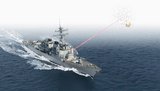
Electric gun for Phalanx tested


Raytheon has successfully tested a new electric gun for the Phalanx Close-In Weapon System, the company announced on 4 April.
The weapon upgrade, which is part of a series of technology refresh projects for Phalanx, will enable soldiers and sailors to fire at varying rates, for more efficient use of ammunition.
Phalanx is a rapid-fire, computer-controlled radar and 20mm gun system that automatically acquires, tracks and destroys threats as a last line of defence.
The live-fire test was carried out to ensure that the electric gun can operate despite the heavy vibrations that occur when Phalanx is fired. The new design replaces a pneumatic motor, compressor and storage tanks, reducing the system's weight by 180lbs and increasing reliability.




More from Naval Warfare
-
![As Indonesia doubles up its order, who else is looking at the Arrowhead 140 frigate design?]()
As Indonesia doubles up its order, who else is looking at the Arrowhead 140 frigate design?
The adaptable design of Babcock’s Arrowhead 140 frigate, already selected by the UK Royal Navy and Poland, has led to more orders from Indonesia while other countries continue to weigh it up.
-
![US Navy to invest more than $700 million in laser-related R&D efforts in FY2026]()
US Navy to invest more than $700 million in laser-related R&D efforts in FY2026
The US Navy’s acceleration of its laser weapon development initiatives reflects a decisive shift towards ultimately having a “laser on every ship” across tomorrow’s surface fleet.
-
![How far will the US Navy’s FF(X) design deviate from the Legend-class?]()
How far will the US Navy’s FF(X) design deviate from the Legend-class?
The new frigate class’s focus on modularity, speed to build and enhanced armament align with the priorities of the US Navy’s Golden Fleet.