Naval Group selected as technical coordinator for EU USSPs
ETME CEO Antonios Peppas (left) and Naval Group senior executive vice president for development Allain Guillou (right). (Photo: Naval Group.)
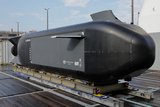
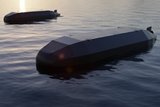
Naval Group has been assigned a leading role in the USSPS project, which aims to create an unmanned miniaturised oil rig technology-based platform capable of persistent maritime surveillance.


Naval Group will act as a technical coordinator for the European Unmanned Semi-Fixed Sea Platforms for Maritime Surveillance (USSPS) project, led by Greece’s ETME.
The group’s solution is based on a patented concept developed by ETME.
The USSPS system will integrate and coordinate C5ISTAR capabilities, generating a maritime surveillance network of sensors based on semi-fixed unmanned platforms.
The platforms will be designed to enable deployment in any geographical region and operate in adverse environmental conditions.
USSPS is set to combine legacy systems and new solutions to improve maritime surveillance capabilities and reduce mission-related costs.
The ETME-led consortium includes Naval Group, Navantia, Applied Intelligence Analytics and Sener Aeroespacial, among others.


More from Naval Warfare
-
![US turns to allies to tackle navy shipbuilding backlog]()
US turns to allies to tackle navy shipbuilding backlog
A White House memorandum acknowledges US Navy shipbuilding backlogs and a weakened industrial base, opening a formal path for South Korean and Japanese yards to help rebuild capacity.
-
![US Navy’s $275 billion BBGN plan hinges on shipyard transformation]()
US Navy’s $275 billion BBGN plan hinges on shipyard transformation
The US Navy’s planned nuclear-powered warship carries a US$275 billion price tag, but the greater story lies in the industrial overhaul needed to build it, from AI-enabled design to digital twins and modular construction.
-
![Europe’s naval contractors benefit from growing refit and upgrade demand]()
Europe’s naval contractors benefit from growing refit and upgrade demand
Rheinmetall’s order to modernise the German Navy frigate Bayern points to a wider European shift towards extending warship service life as new-build programmes face delay.