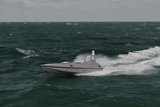
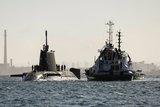
NATO carries out HOD in English Channel and North Sea


Between 23 March and 5 April, the Standing NATO Mine Countermeasures Group 1 (SNMCMG 1) carried out Historical Ordnance Disposal (HOD) 20 to destroy sea mines left from the First and Second World Wars.
The operation took place in the English Channel and North Sea but focused on the Bay of Seine and Bay of Somme.
HOD has been carried out by the alliance ever year since 1996 to find and neutralised bombs, concreted shells and bottom mines. This year, UUVs helped to remove seven German LMB type mines and one submarine grenade with the TNT equivalent of 6,800kg.
Participating vessels including the Andromede (France), the HNoMS Otra (Norway), the HNLMS Willemstad (the Netherlands), BNS Bellis (Belgium), HMS Grimsby (UK) and FGS Donau (Germany).

You may also like


More from Naval Warfare
-
![UK’s $1 billion AUKUS support request signals strong ongoing US collaboration]()
UK’s $1 billion AUKUS support request signals strong ongoing US collaboration
The latest foreign military sales request from the UK has implications for the future of the programme and collaboration between the three nations.
-
![What the rise of interoperability between Western allies means for defence procurement]()
What the rise of interoperability between Western allies means for defence procurement
Major naval initiatives including the European Patrol Corvette programmes and Norway’s UK partnership-focused purchase of Type 26 frigates point to the growing interest in the advantages of commonality across allied navies.
-
![Kraken’s Royal Navy USV contract signals next step in crewed-uncrewed integration]()
Kraken’s Royal Navy USV contract signals next step in crewed-uncrewed integration
The UK Royal Navy’s rapid procurement of uncrewed platforms aligns with the force’s strategic shift towards a fleet better equipped to handle modern threats.
-
![HMS Anson’s milestone stay in Australia cut short during AUKUS deployment]()
HMS Anson’s milestone stay in Australia cut short during AUKUS deployment
The Astute-class submarine’s visit to Australia was the first time maintenance activity on a UK Royal Navy nuclear submarine had been carried out in the country.