Australia orders Mk 45 naval guns for Hunter-class frigates
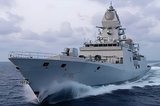
Australia's Hunter-class frigates are planned to replace Anzac-class ships from 2034. (Image: Royal Australian Navy)
Australia has ordered nine Hunter-class frigates to replace Anzac-class frigates under the A$35 billion (US$22.7 billion) Sea 5000 programme.


BAE Systems will deliver three shipsets of Mk 45 medium-calibre naval gun and automated Ammunition Handling System (AHS) to the Royal Australian Navy (RAN) for its new Hunter-class frigates under a US$255 million contract awarded on 8 January.
The Mk 45 gun system will equip the Royal Australian Navy with a common, adaptable gun system that can easily integrate advanced munitions to provide the firepower required to meet the Hunter class deterrence mission.
The Mk 45 gun system combines the 5-inch, 62-caliber Mk 45 Mod 4A naval gun with a fully automated AHS that continuously supplies the gun with ammunition, in high sea state conditions, without assistance from the crew.
According to BAE Systems, variations of the Mk 45 have been deployed on more than 280 ships in 11 navy fleets including Type 26 UK Royal Navy City-class frigates, a design similar to Hunter ships, and US Navy Arleigh Burke-class destroyers.
Work on the contract began in 2023 and finish in 2036, with engineering work completed in Minneapolis, Minnesota and production taking place in Louisville, Kentucky.
The type was selected in June 2018 and construction was due to start in 2020 with delivery of the first ship by the end of the decade. Delays have since pushed the delivery day out to 2034.
Separately, the company announced it had been awarded a contract to upgrade the Mk 45 guns on the RAN’s Anzac-class frigates which will take the guns to Mod 4 standard with a common control system.
Updated 8 January, 2024.


More from Naval Warfare
-
![Five years on: where could opportunities emerge next for AUKUS Pillar II?]()
Five years on: where could opportunities emerge next for AUKUS Pillar II?
Payload commonality, combat systems and electronic warfare are emerging as likely priorities as the trilateral partnership balances building submarines with sharing industrial ecosystems.
-
![From the Baltic to the Gulf: where USV procurement is heading next]()
From the Baltic to the Gulf: where USV procurement is heading next
Saildrone’s new Copenhagen base is one sign of a larger shift, as navies globally turn to uncrewed vessels for surveillance and mine clearance.
-
![Israeli Navy looks to expand as war reshapes future force requirements]()
Israeli Navy looks to expand as war reshapes future force requirements
Israel’s navy is preparing for a larger and more technically diverse role, but its ambitions could be impacted by supply chain restrictions, accelerating demand for domestic naval production as well as autonomous maritime capabilities.
-
![Quantum sensing gathers pace as navies eye undersea advantage]()
Quantum sensing gathers pace as navies eye undersea advantage
As AI dominates defence conversations, industry increasingly points to quantum sensing as the technology set to change submarine and uncrewed underwater vehicle operations.