Sea Venom/ANL completes second firing


MBDA has successfully completed the second development firing of the Sea Venom/Anti-Navire Léger (ANL) missile, MBDA announced on 31 May.
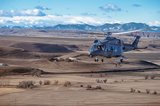
The missile was fired from a DGA Panther test helicopter at Ile Du Levant in southeast France.
The test firing highlighted Sea Venom/ANL’s lock on after launch capabilities and validated the missile’s low-altitude, sea-skimming flight capability, the effectiveness of the data link between the missile and helicopter and Sea Venom/ANL’s autonomous guidance capability, using images from its infrared seeker.
In the UK, the ANL missile will be used from the AW159 Wildcat helicopter, while France will operate the missile from its future Light Joint Helicopter.
The missile is designed to enable the helicopters of both countries’ navies to deal with a range of threats including fast moving patrol boats, corvettes and coastal targets.
MBDA was awarded the production contract for Sea Venom/ANL in March 2014.
Related Equipment in Defence Insight


More from Naval Warfare
-
![Can the US Navy ask Indo-Pacific allies to do more while training with them less?]()
Can the US Navy ask Indo-Pacific allies to do more while training with them less?
As the Iran War draws US ships and marine corps units away from the Indo-Pacific, curtailed exercises and a temporary carrier gap are exposing tensions between Washington’s demand for more self-reliant allies and the joint training needed to realise that ambition.
-
![How could Rheinmetall’s GMF 140 fit with ongoing programmes in North America?]()
How could Rheinmetall’s GMF 140 fit with ongoing programmes in North America?
With Canada committed to its River-class replacement and the USN pursuing a lower-cost frigate, Rheinmetall will need to demonstrate where the GMF 140 can fill a capability gap in the North American fleet.
-
![Australian industry programme builds pipeline for Virginia-class sustainment]()
Australian industry programme builds pipeline for Virginia-class sustainment
Australian businesses can now bid to support Virginia-class submarine sustainment in Western Australia, as momentum around the Henderson Defence Precinct also builds.
-
![South Korea, Japan and Turkey vie for US shipbuilding access in future frigate contest]()
South Korea, Japan and Turkey vie for US shipbuilding access in future frigate contest
Washington’s search for a foreign-built frigate could hand South Korea, Japan and Turkey a larger prize than a double-hull order: a foothold inside the US shipbuilding industrial base.
-
![Russia’s uncrewed boat portfolio hints at future naval demand]()
Russia’s uncrewed boat portfolio hints at future naval demand
Ukrainian intelligence has catalogued more than 20 Russian uncrewed surface vessels, revealing a portfolio weighted towards mine warfare and logistics, with implications for Western naval investment.