Lockheed Martin continues technical engineering work for Hunter-class frigates
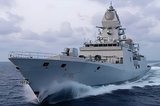
Rendering of a RAN Hunter-class frigate. (Image: RAN)
The latest FMS contract modification covers engineering and management for installation of the Aegis combat management system aboard new Australian frigates.


Lockheed Martin Rotary and Mission Systems is continuing to conduct technical engineering and management efforts for the Australian Surface Combatant programme, which includes the construction of nine Hunter-class frigates for the Royal Australian Navy in Project Sea 5000.
The company received a new $192.39 million FMS contract modification from Naval Sea Systems Command, the DoD revealed on 1 July, with work scheduled for completion by September 2025.
Lockheed Martin Australia was contracted in 2018 to provide its Aegis combat management system (CMS) for the Hunter class, integrated with a locally developed tactical interface from Saab Australia.
The CMS will be able to detect and identify aircraft, submarines and ships at great distances to provide situational awareness to the frigate’s command team and the ability to defend itself or engage with an enemy.
Lockheed Martin is also providing the Mk 41 Vertical Launching System for the Hunter class.
Related Programmes in Defence Insight
Sea 5000 Future Frigate (Hunter Class) [Australia]
Project SEA 5000 Phase 1 (4-6) [Australia]
Project SEA 5000 Phase 1 (1-3) [Australia]
Related Equipment in Defence Insight



More from Naval Warfare
-
![Five years on: where could opportunities emerge next for AUKUS Pillar II?]()
Five years on: where could opportunities emerge next for AUKUS Pillar II?
Payload commonality, combat systems and electronic warfare are emerging as likely priorities as the trilateral partnership balances building submarines with sharing industrial ecosystems.
-
![From the Baltic to the Gulf: where USV procurement is heading next]()
From the Baltic to the Gulf: where USV procurement is heading next
Saildrone’s new Copenhagen base is one sign of a larger shift, as navies globally turn to uncrewed vessels for surveillance and mine clearance.
-
![Israeli Navy looks to expand as war reshapes future force requirements]()
Israeli Navy looks to expand as war reshapes future force requirements
Israel’s navy is preparing for a larger and more technically diverse role, but its ambitions could be impacted by supply chain restrictions, accelerating demand for domestic naval production as well as autonomous maritime capabilities.
-
![Quantum sensing gathers pace as navies eye undersea advantage]()
Quantum sensing gathers pace as navies eye undersea advantage
As AI dominates defence conversations, industry increasingly points to quantum sensing as the technology set to change submarine and uncrewed underwater vehicle operations.