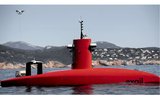
As uncrewed naval systems advance, capabilities to counter them are emerging
Research programmes and system procurement efforts to counter uncrewed surface and underwater vehicle threats are accelerating as naval drone uptake spreads.
The port of Pointe Noire, Republic of Congo, will be secured by a Leonardo-Finmeccanica integrated maritime system under a contract announced on 18 November.
The €150 million contract was issued by the Congolese government to the Italian Alliance for Ports (IA4P), which is led by Leonardo-Finmeccanica; the company’s portion of the contract equals around €30 million.
Leonardo will provide systems for both maritime and land-based security which will employ radar and electro-optical sensors, communications systems, logistics management and port operations systems.
The wider agreement includes civil work including the construction of new docks for a total length of 700m as well as further engineering and design work and project management.
The contract is part of an agreement between the Italian and Republic of Congo governments which involves the development of a ‘multi-modal’ integrated transport system in the Congo basin covering river, sea and rail transport.
A second phase of the project will extend the maritime surveillance at Pointe Noire to cover the Republic of Congo’s Exclusive Economic Zone (EEZ) via an integrated system that will include radar sensors and a secure telecommunications network.
Research programmes and system procurement efforts to counter uncrewed surface and underwater vehicle threats are accelerating as naval drone uptake spreads.
After recording a nearly six-year delay in the OPC schedule, the USCG intends to advance with the programme, reaching multiple milestones in the short term.
Australia’s selection of an upgraded Mogami-class frigate marks Japan’s first-ever export of a major surface combatant. With an ambitious 2029 delivery target, the deal could open the door to further naval exports – but inexperience and geopolitical friction with China loom large.
As sea ice extent hits a record low and geopolitical tensions increase in the High North, navies are contending to adopt the technologies needed to operate beneath an increasingly unpredictable Arctic Ocean.
Enabling Aegis-equipped vessels to launch PAC-3 MSE interceptors will give the USN more options to engage highly manoeuvrable hypersonic missiles – including the ones China has been developing.
Andrea Simone Pinna, OCCAR-EA combat system officer for the U212 NFS programme, outlined production progress, new capabilities and plans for the Italian Navy’s next-generation conventional submarine.