Learning from Japan: how to transform a fleet at speed
An artist’s impression of the Japanese ASEV destroyer. (Image: Japan MoD)
At a recent event in London, lessons were shared based on the experiences of the Japanese Navy and how it has been building a fleet rapidly.


The Japanese Maritime Self-Defense Force (JMSDF) has had to adapt rapidly in recent years to deal with a rising threat profile in the Indo-Pacific region.
It is not alone in having to respond fast to changing threats and emerging aggressors. The US Navy (USN) for one is currently extending the lifespans of some of its oldest destroyers, while gearing up for a potential future conflict with China – the only superpower in the world with a navy that exceeds the size of its own.
But a speaker at the recent Surface Warships conference in London explained the way the
Our news & analysis is now part of Defence Insight®
A Basic-level or higher Defence Insight subscription is now required to view this content.


More from Naval Warfare
-
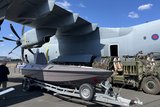
![A400M trial demonstrates airborne deployment of uncrewed surface vessel]()
A400M trial demonstrates airborne deployment of uncrewed surface vessel
Kraken Technology Group’s A400M airdrop of a K3 Scout uncrewed surface vessel points to a new way for navies to insert USVs into contested waters, bypassing ports and motherships.
-
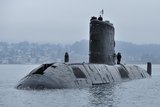
![Babcock onshores 85% of Canada’s submarine supply chain as it eyes future CPSP programme]()
Babcock onshores 85% of Canada’s submarine supply chain as it eyes future CPSP programme
By moving most of the Royal Canadian Navy’s submarine supply chain into Canada, Babcock Canada is driving to strengthen sovereign sustainment capabilities while preparing to compete to maintain the future Canadian Patrol Submarine Project.
-
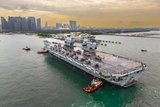
![From the seas to the web: the changing shape of UK defence in Southeast Asia]()
From the seas to the web: the changing shape of UK defence in Southeast Asia
As his final engagement before leaving his post as the head of the British defence staff for Southeast Asia and defence adviser to Singapore, Brigadier Eddie Maskell-Pedersen spoke with Shephard about maritime security, cyber cooperation and long-term partnerships.