Keel laid for Swedish SIGINT ship


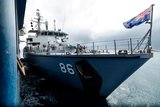
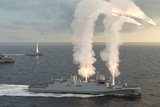
PGZ Stocznia Wojenna has laid the keel for the new Swedish signals intelligence (SIGINT) ship at the Nauta shipyard in Gdynia, Poland, Saab announced on 15 June.
Saab received the contract to design and build the SIGINT ship from the Swedish Material Defence Administration in 2017. Subsequently it selected PGZ’s Nauta Shipyard to perform the construction, launch and early sea trials of the vessel. Before the delivery to the Swedish Navy, the ship’s final sea trials and installation of equipment will be carried out at Saab’s shipyard in Karlskrona, Sweden.
The 74m long ship will have a displacement of 2,200t and will replace the Swedish Navy’s existing HSwMS Orion launched in 1984.
Gunnar Wieslander, head of Saab Kockums, said: ‘Special purpose ships are primarily used for the interception and analysis of radio-transmitted signals and need to be highly reliable and available. Therefore you need highly skilled shipbuilders to build this kind of ship. We are very pleased with the progress of the construction process.’

You may also like

More from Naval Warfare
-
![How France’s SNLE 3G programme is reshaping the naval nuclear industrial base]()
How France’s SNLE 3G programme is reshaping the naval nuclear industrial base
Extending far beyond a four-submarine replacement programme, France’s ballistic missile submarine effort is a decades-long industrial effort designed to preserve the country’s ability to build and sustain nuclear-powered strategic platforms.
-
![China’s mineral processing dominance exposes naval supply chain vulnerabilities]()
China’s mineral processing dominance exposes naval supply chain vulnerabilities
Competition for critical minerals, and China’s dominance of their processing, is emerging as a decisive factor in future naval procurement programmes.
-
![Suppliers await next step in Australia’s mine warfare transition]()
Suppliers await next step in Australia’s mine warfare transition
Australia’s mine countermeasure capability remains in flux as the Huon-class nears retirement, but accelerated investment in autonomous systems is opening a path for industry.
-
![Can the US Navy ask Indo-Pacific allies to do more while training with them less?]()
Can the US Navy ask Indo-Pacific allies to do more while training with them less?
As the Iran War draws US ships and marine corps units away from the Indo-Pacific, curtailed exercises and a temporary carrier gap are exposing tensions between Washington’s demand for more self-reliant allies and the joint training needed to realise that ambition.
-
![How could Rheinmetall’s GMF 140 fit with ongoing programmes in North America?]()
How could Rheinmetall’s GMF 140 fit with ongoing programmes in North America?
With Canada committed to its River-class replacement and the USN pursuing a lower-cost frigate, Rheinmetall will need to demonstrate where the GMF 140 can fill a capability gap in the North American fleet.