Japan to bolster patrols near disputed isles


Japan will beef up airborne patrols of disputed islands in the East China Sea, an official said on 13 April, in response to increased Chinese activity in the area.
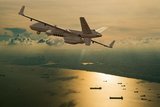
New crew members will operate two extra jets that will be deployed in the next 12 months to strengthen patrols around the Senkaku Islands, according to a spokesman from the Japan Coast Guard.
The spokesman told AFP: ‘We’ll boost our aviation crew by bringing in 60 more members.’
Japan will deploy two Falcon 2000LXS jets in fiscal 2018 and one more plane in 2019 to allow a ‘24-hour patrol system’ to monitor the disputed islands, known in China as the Diaoyus.
The move comes after Japan spotted a Chinese nuclear-powered submarine in disputed waters early in 2018.
The uninhabited islets are at the centre of a festering row between Tokyo and Beijing, which is also involved in a widening dispute with several Southeast Asian countries over islands in the South China Sea.
The Japanese government has long complained about China’s routine dispatch of coast guard ships to waters surrounding the islands.
Relations between Japan and China deteriorated in 2012 when Tokyo ‘nationalised’ some of the islets.
Since then, the two top Asian economies have taken gradual steps to mend fences but relations remain tense.

You may also like

More from Naval Warfare
-
![Russia’s uncrewed boat portfolio hints at future naval demand]()
Russia’s uncrewed boat portfolio hints at future naval demand
Ukrainian intelligence has catalogued more than 20 Russian uncrewed surface vessels, revealing a portfolio weighted towards mine warfare and logistics, with implications for Western naval investment.
-
![Ukraine’s new long-range 12m autonomous vessel can deploy other drones]()
Ukraine’s new long-range 12m autonomous vessel can deploy other drones
Ukraine’s UForce unveiled the MV11 uncrewed surface vessel, designed to launch and support other naval drones at sea, fuelling debate over the future of autonomous maritime task groups.
-
![German Navy’s Israeli missile test points to deepening defence-industrial ties]()
German Navy’s Israeli missile test points to deepening defence-industrial ties
The test-firing of an Israel Aerospace Industries LORA ballistic missile from a German vessel highlights the Bundeswehr’s focus on speed to capability as it trials Israel’s operationally proven technology.
-
![Global submarine suppliers compete for a rapidly shrinking market]()
Global submarine suppliers compete for a rapidly shrinking market
Diminishing submarine competitions worldwide are leaving fewer acquisition opportunities, pushing contractors toward alternatives.