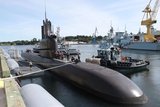
Iran attempts to seize British tanker


Armed Iranian boats attempted to seize a British tanker in strategic Gulf waters on 10 July but were driven off by a Royal Navy frigate, international media reported.
The Iranians ordered the British Heritage oil tanker, which was crossing into the Strait of Hormuz area, to change course and stop in Tehran’s nearby waters, according to CNN, citing two American officials.
A US aircraft shot video of the incident, which ended when HMS Montrose - which was escorting the tanker - trained its guns on the boats and successfully warned them to back off, the channel said.
Iran’s President Hassan Rouhani had warned Britain of ‘consequences’ on 10 July over the detention of one of the country’s oil tankers off the coast of Gibraltar.
‘I point out to the British that you initiated insecurity (on the seas) and you shall grasp the consequences of it later on,’ Rouhani said in comments to the cabinet broadcast by state TV.
The 330m Grace 1 tanker, capable of carrying two million barrels of oil, was halted on last week by police and customs officers in Gibraltar - a British overseas territory on Spain’s southern tip - with the aid of a detachment of British Royal Marines.
Iran condemned the detention as an ‘illegal interception,’ but Gibraltar officials said that the cargo was believed to be destined for Syria, which is subject to European sanctions.
Iran denied this, saying that the destination ‘was somewhere else.’
The latest reported incident comes after Iran said it had lost patience with perceived inaction by European countries more than a year after US President Donald Trump unilaterally pulled the US out of a landmark 2015 international agreement curbing Tehran’s nuclear program, and started to impose punishing sanctions, raising tensions between the US and Iran.

More from Naval Warfare
-
![The UK joins the movement towards joint procurement]()
The UK joins the movement towards joint procurement
The UK will spend an estimated US$3.89 billion over the next decade in joint naval programmes, a lot of which will be in cooperation with Norway.
-
![Rheinmetall’s GMF 140: Ambitious frigate or market misfit?]()
Rheinmetall’s GMF 140: Ambitious frigate or market misfit?
Rheinmetall has unveiled its first next-generation frigate design, showing ambitions to compete as a surface combatant prime contractor. While the company is targeting North America, analysts believe the concept may be better positioned for future European programmes.
-
![US Navy $76.6bn award provides stability for submarine production]()
US Navy $76.6bn award provides stability for submarine production
The US Department of War’s US$76.6 billion Columbia-and Virginia-class submarine contract gives industry demand certainty as Washington seeks to rebuild its shipbuilding base.
-
![Dreadnought Phase 4 opens £2.5 billion supply chain opportunity]()
Dreadnought Phase 4 opens £2.5 billion supply chain opportunity
The UK government’s £8.4 billion Dreadnought Phase 4 investment sets aside £2.5 billion for the wider submarine supply chain, opening new work beyond BAE Systems’ prime contract.
-
![Hanwha Ocean deepens US ties and eyes Saudi submarine prospect after Canada setback]()
Hanwha Ocean deepens US ties and eyes Saudi submarine prospect after Canada setback
Hanwha Ocean is deepening ties with the US and eyeing a submarine opportunity in Saudi Arabia, as South Korea looks to convert its Canadian defeat into export momentum.