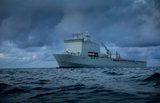
Indo Pacific 2025: Autonomous systems reigned but can the Australian Defence Force afford it?
SubSea Craft (SSC) and Australian company Greenroom Robotics signed a teaming agreement at Indo Pacific involving SSC’s MARS USV, pictured. (Photo: SubSea Craft)
Multiple autonomous systems and technologies were on display at this year’s Indo Pacific, but questions remain over how the Australian Department of Defence will balance the books.


A great deal of the Australian Defence Force’s (ADF) budget is being spent on Australia’s Hunter-class frigate and nuclear-powered submarine programmes, but the force continues to pursue short-term autonomy and counter-uncrewed vehicle capabilities in line with its AUKUS commitments.
At Indo Pacific 2025 in Sydney, exhibitors demonstrated an aspiration to reduce the vulnerability of human crew members afloat, achieve attritable mass quickly and greatly extend the ADF’s strike range. Before next year’s federal budget in May, the Australian Department of Defence (Defence) expects to release an update of its National Defence Strategy (NDS) and industry is hoping for more money to deal with
Already have an account? Log in
Want to keep reading this article?

More from Naval Warfare
-
![Gulf tensions force Western navies to confront mine warfare shortfalls]()
Gulf tensions force Western navies to confront mine warfare shortfalls
The conversion of RFA Lyme Bay comes during signs that European navies may once again need to cooperate on Gulf mine clearance operations.
-
![What does Saab’s operations shake-up mean for its new ‘Naval’ chapter?]()
What does Saab’s operations shake-up mean for its new ‘Naval’ chapter?
Saab’s merger of its Kockums and Naval Combat Systems divisions into a single business area called Naval, effective 1 April 2026, aims to enhance efficiency, innovation and competitive positioning in the naval sector.
-
![Hanwha Ocean and TKMS are firming up their Canadian next-gen submarine proposals]()
Hanwha Ocean and TKMS are firming up their Canadian next-gen submarine proposals
CPSP competitors are proposing platforms fitted with advanced, next-generation capabilities to be built and sustained in cooperation with the Canadian industry.