India seeks several types of patrol vessel for its navy and coastguard
This is one of the IN’s existing fast interdiction craft built by Solas Marine. They will be replaced by 120 new FIC-Is under a recently released RfI. (IN)
India has launched several sizeable tender exercises in the hope of obtaining new patrol boats and fast interdiction craft.


India’s MoD is seeking two types of patrol vessel for the Indian Navy (IN), with one RfI issued in December 2022 for 120 Fast Interceptor Craft - Indigenous (FIC-I) and another in January for 21 New Water Jet Fast Attack Craft (NWJFAC) - Indigenous.
The former has a deadline of 20 February and the latter 10 March.
The NWJFAC document supersedes a January 2021 RfI for seven New-Generation Fast Attack Craft, with somewhat different specifications listed.
The 120 new FIC-Is will replace the IN’s extant fleet of around 100 FICs. These include 77 Solas Marine craft and 15 Couach-built craft
Our news & analysis is now part of Defence Insight®
A Basic-level or higher Defence Insight subscription is now required to view this content.



More from Naval Warfare
-
![All eyes on Royal Navy’s Type 93 market engagement as industry prepares bids]()
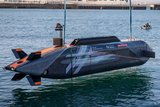
All eyes on Royal Navy’s Type 93 market engagement as industry prepares bids
Responses are due by 29 October as the Royal Navy tests the market, with BAE Systems’ Herne and MSubs’ Excalibur setting up a contest where payloads may decide the winner.
-
![US Navy’s MQ-25 Stingray approaches carrier-integration tests]()
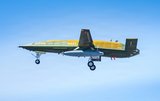
US Navy’s MQ-25 Stingray approaches carrier-integration tests
Boeing has outlined its upcoming precision-landing and carrier-airspace trials as MQ-25 manufacturing shifts towards Illinois, with initial Lot 1 deliveries expected in 2029.
-
![From Poland to the Pacific: can Miecznik become a blueprint for other navies?]()
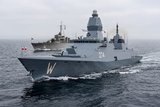
From Poland to the Pacific: can Miecznik become a blueprint for other navies?
Babcock is taking its Polish industrial partnership approach to Denmark and New Zealand as navies seek sovereign shipbuilding skills alongside ships.