Independence variant LCS in SSMM testing


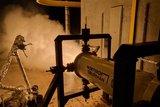
The US Navy has carried out a successful structural test firing of the Littoral Combat Ship (LCS) Surface-to-Surface Missile Module (SSMM) at the Point Mugu Sea Range.
The test firing was carried out to assess the SSMM capability on the Independence variant LCS, following successful testing on the Freedom variant earlier this year.
The SSMM is one of four modules comprising the LCS Surface Warfare Mission Package. Using Longbow Hellfire missiles in a vertical launch capability to counter small boat threats, SSMM increases both the range and the number of targets LCS can engage.
Structural test firing is a total-ship test involving live weapons fire and is required for each ship class or variant. The exercise also prepares the ship and trains the crews for more complex surface warfare tracking and live-fire exercises to follow, which will culminate in initial operational test and evaluation at the end of 2019.
The Surface Warfare Mission Package also includes the Gun Mission Module, containing 30mm guns; the Maritime Security Module, with 11-metre rigid-hull inflatable boats; and the Aviation Mission Module, including an MH-60R Seahawk helicopter and a VTOL UAS.
Related Equipment in Defence Insight

More from Naval Warfare
-
![Seoul’s SSN programme launch raises questions on fuel, tech and build location]()
Seoul’s SSN programme launch raises questions on fuel, tech and build location
Seoul has unveiled its “Jangbogo-N Project” to develop domestically built, nuclear-propelled attack submarines in close coordination with Washington, marking an escalation of the Republic of Korea’s deterrence posture against Pyongyang’s undersea nuclear capabilities.
-
![Frigates and submarines anchor Brazilian naval modernisation worth US$5.52 billion]()
Frigates and submarines anchor Brazilian naval modernisation worth US$5.52 billion
Shipbuilding programmes established over the past decade are setting Brazil's course towards having one of the most modern navies in the region.
-
![Shoreline vulnerability drives Gulf interest in USV networks]()
Shoreline vulnerability drives Gulf interest in USV networks
Ukraine’s combat-proven Magura uncrewed surface vessel is attracting Gulf state interest as the Iran war exposes gaps in layered maritime air defence, raising questions about whether low-cost attritable systems can gain a foothold in a procurement culture historically drawn to high-end Western platforms.
-
![Partnerships will be critical for future projects at Latin American shipyards]()
Partnerships will be critical for future projects at Latin American shipyards
Multiple Latin American navies are modernising their fleets by prioritising domestically manufactured surface vessels and even submarines via international partnerships.