IAI and Thales UK offer Sea Serpent for Royal Navy
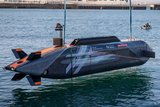
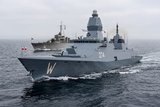
IAI is working with Thales with the aim to equip UK RN Type 23 frigates with a new kind of missile. (Photo: IAI)
Partners IAI and Thales wish to equip Type 23 frigates with next-generation missile technology.


Israel Aerospace Industries (IAI) and Thales UK on 13 April announced a cooperation agreement to offer Sea Serpent anti-ship and anti-surface missiles to the UK RN.
The RN may equip its Type 23 frigates with Sea Serpent in response to the growing intensity of emerging threats.
Sea Serpent provides anti-ship and land capabilities at ranges beyond 200km. Its design is derived from the Gabriel family of surface-to-surface missiles, albeit with significant upgrades.
According to IAI, Sea Serpent can overcome kinetic counter-fire and electronic countermeasures so that the missile can locate and attack its target in any environment.
The missile has been designed for contested and confusing situations, characterised by many decoys and interference. Sea Serpent can adjust its course while in flight, using real-time ISTAR feeds.
The partnership with Thales follows an announcement last year that IAI and ST Engineering were teaming up to market a new anti-ship missile.
This article was updated on 14 April to reflect the fact that a decision is pending on Type 23 missiles.
As part of our promise to deliver comprehensive coverage to our Defence Insight and Premium News subscribers, our curated defence news content provides the latest industry updates, contract awards and programme milestones.



More from Naval Warfare
-
![Canada assesses security equipment changes for Polar Icebreaker Imnaryuaq]()
Canada assesses security equipment changes for Polar Icebreaker Imnaryuaq
The Canadian Department of National Defence is evaluating communications and reconnaissance changes for CCGS Imnaryuaq’s expanded maritime security role, while retaining its 2032 acceptance target.
-
![All eyes on Royal Navy’s Type 93 market engagement as industry prepares bids]()
All eyes on Royal Navy’s Type 93 market engagement as industry prepares bids
Responses are due by 29 October as the Royal Navy tests the market, with BAE Systems’ Herne and MSubs’ Excalibur setting up a contest where payloads may decide the winner.
-
![US Navy’s MQ-25 Stingray approaches carrier-integration tests]()
US Navy’s MQ-25 Stingray approaches carrier-integration tests
Boeing has outlined its upcoming precision-landing and carrier-airspace trials as MQ-25 manufacturing shifts towards Illinois, with initial Lot 1 deliveries expected in 2029.
-
![From Poland to the Pacific: can Miecznik become a blueprint for other navies?]()
From Poland to the Pacific: can Miecznik become a blueprint for other navies?
Babcock is taking its Polish industrial partnership approach to Denmark and New Zealand as navies seek sovereign shipbuilding skills alongside ships.